






What's Happening?
Shares of major semiconductor companies, including Nvidia, AMD, and TSMC, experienced a decline in U.S. premarket trading following the unveiling of a new AI model by a Chinese developer. The model, named Kimi K3, was introduced by Alibaba-backed Moonshot
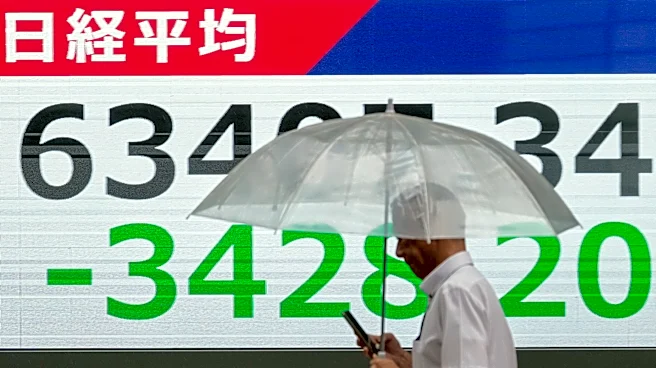
AI and is designed to compete with leading U.S. AI systems. This development comes as Japan's technology sector also faced a downturn, with the Nikkei 225 index dropping 4.03%, marking its steepest weekly decline since April 2025. The broader Topix index also fell by 2.72%. The decline in technology shares was led by memory maker Kioxia, which fell nearly 16%, and other companies like Tokyo Electron and Advantest, which saw declines of about 8% and 7%, respectively. In the U.S., Nvidia's shares fell about 2%, AMD and Cerebras each lost around 3%, and Micron Technology slipped nearly 2%. Western Digital and Seagate Technology also saw declines of about 3%, while TSMC dropped nearly 4% despite reporting stronger-than-expected quarterly results.
Why It's Important?
The decline in shares of major semiconductor companies highlights the growing competitive pressure from Chinese AI developers, which could impact the market dynamics for AI-related semiconductor companies in the U.S. The introduction of the Kimi K3 model by Moonshot AI signifies China's increasing capabilities in AI technology, potentially challenging the dominance of U.S. companies in this sector. This development could lead to increased competition and innovation in the AI industry, affecting the strategies and market positions of U.S. semiconductor companies. Additionally, the downturn in Japan's technology sector may have broader implications for global technology markets, influencing investor sentiment and market performance.
What's Next?
As the competition in the AI sector intensifies, U.S. semiconductor companies may need to reassess their strategies to maintain their market positions. This could involve increased investment in research and development to enhance their AI capabilities and stay ahead of emerging competitors. Investors will likely monitor the performance of AI-related stocks closely, as well as any further developments from Chinese AI developers. The response from U.S. companies and potential regulatory actions could also shape the future landscape of the AI and semiconductor industries.