







What's Happening?
AZIO AI Holdings (NASDAQ: AZIO) has announced that its Atlas One data center, located in Live Oak County, Texas, is designed to operate autonomously from the Electric Reliability Council of Texas (ERCOT) power grid. This facility, part of the company's
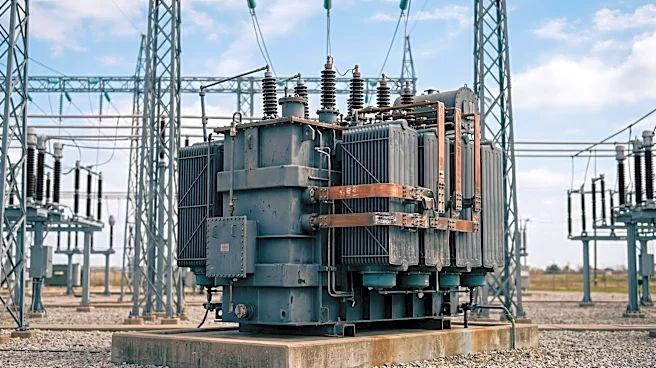
Project Atlas initiative, will generate its own electricity on-site using natural gas, thereby eliminating any reliance on the ERCOT grid. The company stated that there are no pending large-load interconnection requests with ERCOT for Atlas One. This strategic decision comes as Texas implements stricter regulations for major electricity consumers, including data centers, and ERCOT reviews a substantial volume of interconnection requests, totaling approximately 474 gigawatts. AZIO's self-supplied power approach aims to mitigate risks associated with grid interconnection delays, infrastructure expenses, and evolving regulatory frameworks. The Atlas One project has secured a 10-megawatt infrastructure hosting agreement with Power Champion, though this capacity is not yet active. AZIO is progressing towards an 11-megawatt first phase through a phased development, ensuring each stage has independent equipment, connectivity, site preparations, and air authorization for power generation, aligning infrastructure growth with contracted capacity.
Why It's Important?
This move by AZIO AI Holdings is significant for several reasons, particularly within the context of Texas's energy landscape and the burgeoning data center industry. By operating independently of the ERCOT grid, AZIO aims to circumvent potential operational disruptions and cost volatilities that have historically affected businesses reliant on the Texas power infrastructure. This strategy could set a precedent for other large-scale energy consumers, especially data centers, which require consistent and substantial power. The independence from ERCOT also positions AZIO to avoid the complexities and delays associated with grid interconnection requests, which are becoming increasingly scrutinized due to the sheer volume of demand. For the broader U.S. business sector, this highlights a growing trend towards energy self-sufficiency in critical infrastructure, driven by regulatory pressures and the need for operational resilience. Companies that can secure their own power sources may gain a competitive advantage, reducing exposure to grid-related risks and potentially offering more stable services to their clients. This could influence future investment decisions and infrastructure development in energy-intensive industries.
What's Next?
AZIO AI Holdings plans to proceed with the phased development of its Atlas One data center, with the initial phase targeting 11 megawatts of capacity. Each subsequent phase will require separate equipment, connectivity, site preparations, and air authorization for power generation, ensuring a controlled expansion that aligns with contracted capacity. The company's continued independence from the ERCOT grid will likely be a key operational and marketing point, especially as Texas regulations concerning large electricity consumers continue to evolve. Other data center operators and energy-intensive businesses in Texas may observe AZIO's model closely, potentially leading to similar self-supplied power strategies to mitigate grid dependency risks. This could spur innovation in on-site power generation solutions and influence policy discussions around energy infrastructure and consumption in the state. The success of Atlas One's independent operation could also attract more investment into similar decentralized energy projects, further diversifying the energy supply landscape for critical infrastructure.
Beyond the Headlines
The decision by AZIO AI Holdings to operate its Atlas One data center independently of the ERCOT grid points to deeper implications regarding energy resilience, regulatory adaptation, and technological innovation in the U.S. It underscores a growing recognition among critical infrastructure providers that traditional grid reliance may no longer be sufficient to guarantee operational continuity and cost predictability. This shift could accelerate the adoption of distributed energy resources and microgrids, fostering a more decentralized energy ecosystem. Ethically, it raises questions about equitable energy access and the potential for large corporations to create their own energy islands, potentially leaving smaller entities more vulnerable to grid fluctuations. Legally, it may prompt new regulatory frameworks to govern private energy generation and consumption, especially concerning environmental impacts and safety standards. Culturally, it reflects a broader societal trend towards self-reliance and resilience in the face of systemic vulnerabilities, influencing how industries approach infrastructure development and resource management in the long term.