







What's Happening?
New York-based Pythag Tech has successfully closed a $4.25 million seed funding round, led by Azolla Ventures. This capital injection is earmarked to expand the company's biological dataset and scale its machine learning platform, which is designed to optimize
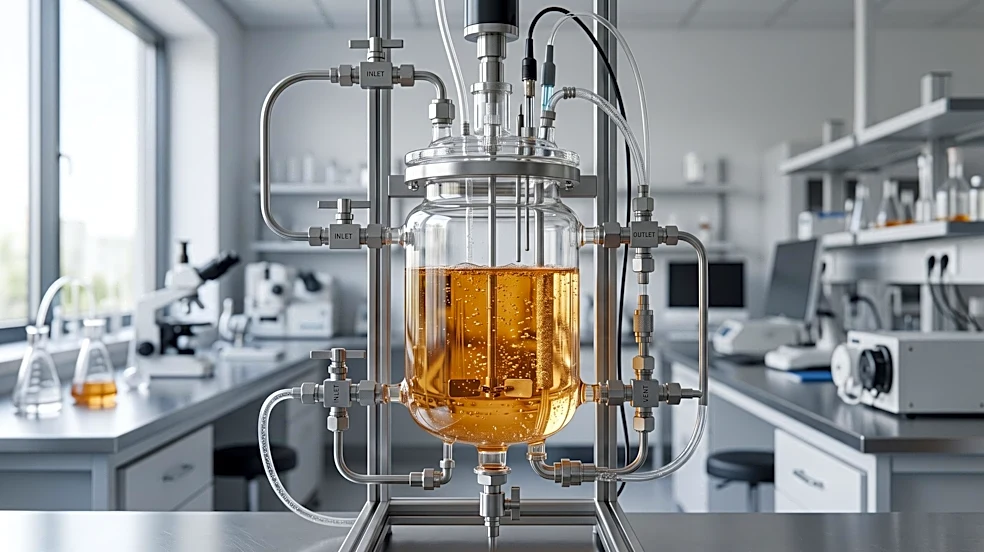
cultivated meat production processes. Pythag Tech's business model focuses on licensing these AI-designed processes to food companies, rather than producing cultivated meat itself. The company's AI models direct large-scale laboratory experiments targeting the three primary cost drivers in cultivated meat production: growth media, cell line development, and bioprocessing. Each experiment contributes to a proprietary dataset, which the AI models then utilize to identify new production parameters for subsequent testing rounds. This approach aims to make the research and development (R&D) phase more cost-effective and accelerate the timeline for bringing cultivated meat to commercial scale. The funding will also support the acquisition of automation equipment, the establishment of a second lab in Thailand in addition to its Melbourne lab, and the expansion of both its wet lab team for data generation and its AI team for computational discovery.
Why It's Important?
This funding for Pythag Tech is significant for the U.S. cultivated meat industry, which has faced a substantial decline in investment, with funding falling by 49% in 2025 to just $74 million, a stark contrast to its peak of $1.5 billion four years prior. By focusing on reducing the cost and accelerating the R&D of cultivated meat through AI and machine learning, Pythag Tech addresses a critical barrier to the industry's commercial viability and scalability. Lowering production costs, particularly for growth media, cell line development, and bioprocessing, is essential for cultivated meat to compete with conventional meat products on price and availability. This development could enable food companies to diversify their supply chains and revenue streams, especially in the context of challenges facing conventional beef supply, such as the U.S. cattle herd being at its lowest level since the 1950s and record ground beef prices. The success of companies like Pythag Tech could pave the way for cultivated meat to become a more accessible and economically attractive alternative, potentially impacting the broader food industry and consumer choices in the U.S.
What's Next?
Pythag Tech plans to use the newly acquired capital to further develop its biological dataset and machine learning platform. This includes expanding its wet lab and AI teams and establishing new laboratory facilities to generate more diverse data across cells, media, and bioprocesses. The company aims to strengthen its platform to facilitate partnerships with food companies for joint R&D efforts, with the goal of bringing cultivated meat products to market faster. While Pythag Tech itself does not undergo regulatory approval processes, it intends to work jointly with its customers through these approvals, focusing on building processes and products that meet regulatory standards. The company is currently exploring partnerships, which could lead to the licensing of its optimized production processes to various cultivated meat startups and established food corporations. The continued development and application of its AI technology are expected to yield actionable insights for cultivated meat producers, helping them achieve profitable commercial-scale manufacturing and potentially transforming the future of food production.
Beyond the Headlines
The investment in Pythag Tech highlights a broader trend towards leveraging advanced technologies like artificial intelligence and machine learning to solve complex challenges in sustainable food production. The cultivated meat sector, while promising for its potential to reduce environmental impact and address ethical concerns associated with traditional animal agriculture, has struggled with high production costs and scalability issues. Pythag Tech's approach of optimizing R&D processes through AI could set a precedent for how other nascent industries tackle similar hurdles. This model of a technology provider licensing optimized processes, rather than directly producing the end product, could foster a more collaborative ecosystem within the alternative protein space. Furthermore, the emphasis on plant-based growth media, as mentioned in the broader context of peptone markets, aligns with a growing consumer and industry demand for non-animal-derived components, which could further enhance the appeal and sustainability of cultivated meat. This technological advancement could also influence regulatory frameworks, as the industry moves towards more efficient and transparent production methods, potentially accelerating the acceptance and integration of cultivated meat into the mainstream food supply.