








What's Happening?
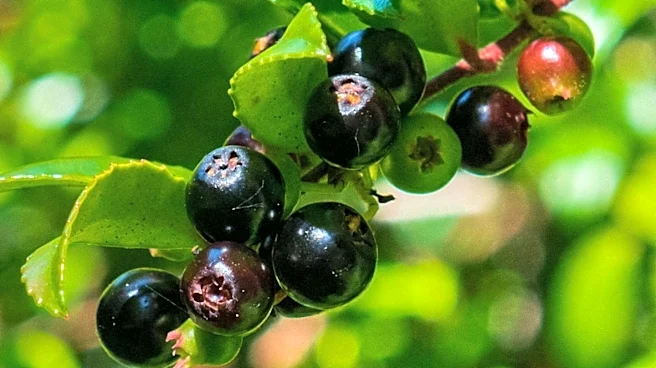
A live Serviceberry plant, also known as Juneberry, is available for gardens and patios. This plant, typically 4 to 8 inches tall when received, produces small, sweet berry clusters suitable for fresh consumption, jams, or pies. Depending on pruning,
it can develop into a small tree or shrub, reaching heights of 15 to 25 feet over time. It is well-suited for USDA Zones 4 through 8, making it adaptable to a wide range of climates. The plant can be grown in a large container or directly in the ground in a sunny location, requiring consistent moisture but well-drained soil. It is described as low-maintenance once established, needing regular watering and spring fertilization.
Why It's Important?
The Serviceberry tree's offering is significant for U.S. gardeners and homeowners due to its versatility and multiple benefits. Its adaptability to various USDA zones makes it accessible to a broad demographic across the country, promoting native plant use and biodiversity. As an edible plant, it provides a source of fresh berries, contributing to local food production and potentially reducing reliance on commercially grown fruits. The tree's aesthetic appeal, with its fall foliage turning orange-red, offers multi-season interest, enhancing landscape beauty. Furthermore, its low-maintenance nature makes it an attractive option for both experienced and novice gardeners, encouraging more people to engage in gardening and connect with nature. The berries also attract birds, supporting local wildlife ecosystems.
What's Next?
Individuals acquiring a Serviceberry plant should ensure it is planted in a sunny spot with well-drained soil, whether in a container or directly in the ground. Initial care will involve regular watering to help the young plant establish. As it grows, gardeners will need to decide whether to prune it into a small tree or a shrub, influencing its mature size and shape. In late spring to early summer, the plant will produce berry clusters, which may require netting if gardeners wish to protect them from birds. Ongoing care will include annual fertilization in the spring. The plant's fall foliage will provide seasonal color, and its berries will offer a harvest for several years to come.
Beyond the Headlines
The Serviceberry tree represents a broader trend in horticulture towards plants that offer both ecological benefits and practical uses. Its role as a native plant supports local ecosystems by providing food for birds and other wildlife, which is crucial for maintaining ecological balance. The emphasis on 'edible landscaping' reflects a growing desire among consumers to integrate food production into their living spaces, blurring the lines between ornamental gardens and productive farms. This approach can lead to increased food literacy, greater appreciation for natural cycles, and a more sustainable relationship with the environment. The Serviceberry's ease of care also aligns with a demand for low-effort, high-reward gardening solutions, making sustainable practices more accessible to the general public.