




What's Happening?
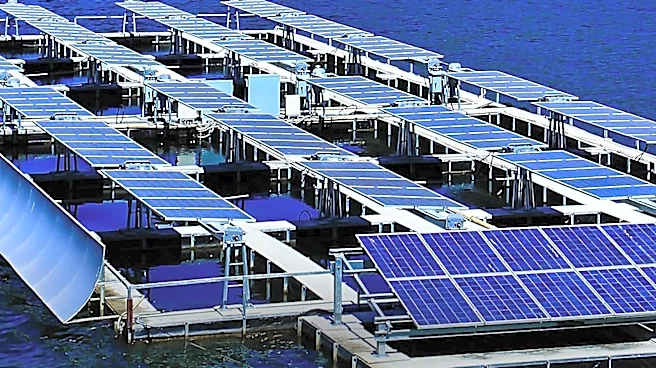
Researchers at Western University in Ontario have successfully tested a floating solar panel array on a pond throughout a Canadian winter. The 7-kilowatt system, consisting of 40 flexible solar panels mounted on waterproof foam, was protected from ice
by an aquarium pump. This experiment demonstrated that floating solar technology can withstand freezing conditions, providing valuable data for future deployments in cold climates. The study highlights the potential for expanding solar energy solutions to regions previously considered unsuitable due to harsh winters.
Why It's Important?
This development represents a significant advancement in renewable energy technology, particularly for regions with cold climates. By proving that floating solar panels can operate effectively in freezing conditions, the study opens new opportunities for sustainable energy production in areas with limited solar infrastructure. This could lead to increased adoption of solar power, reducing reliance on fossil fuels and contributing to global efforts to combat climate change. The economic feasibility of the system, with a payback period of just over four years, further supports its potential for widespread implementation.