




What's Happening?
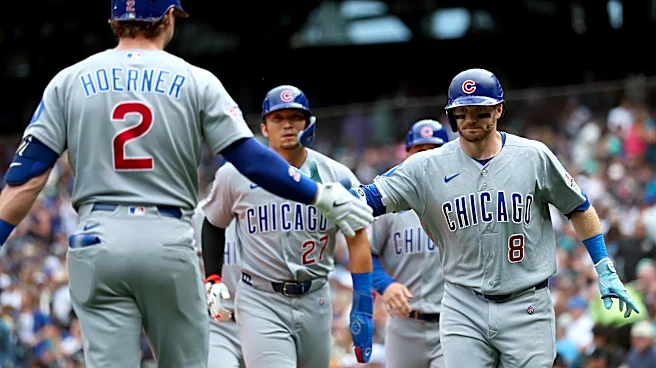
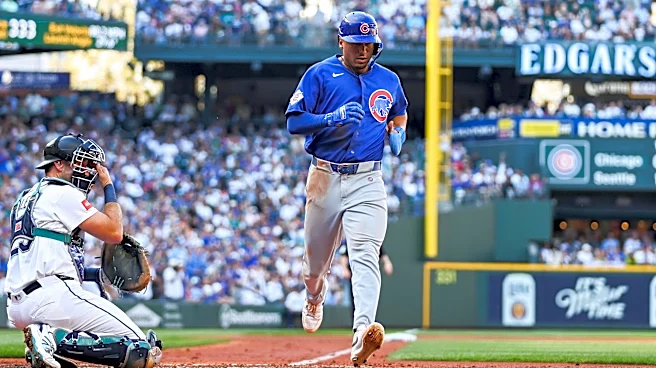
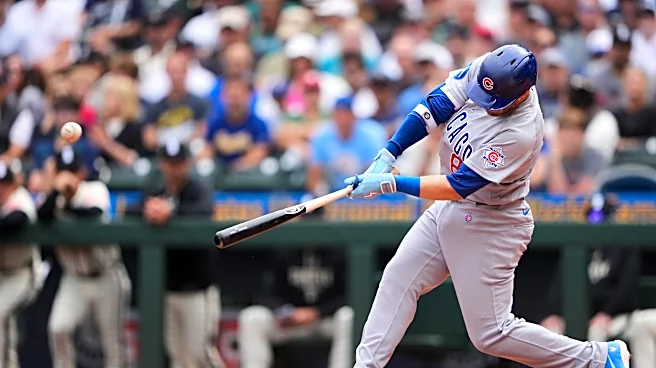
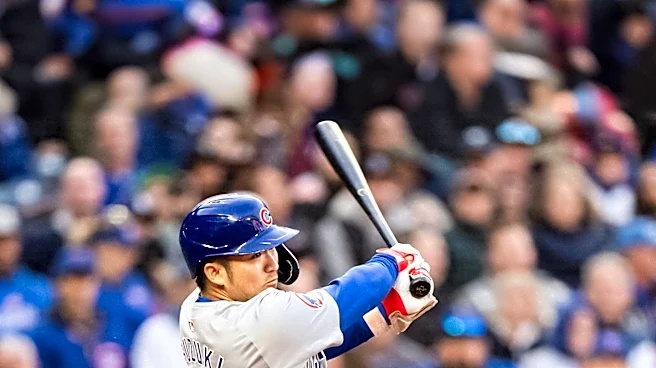
The Chicago Cubs are at a pivotal juncture regarding the future of right fielder Seiya Suzuki. Suzuki has emerged as a key offensive contributor, ranking as the 22nd-best hitter in MLB this year by wRC+ and maintaining a consistent 130 wRC+ over the last
four years, a statistic comparable to star players like Pete Alonso and Rafael Devers. Despite trade rumors earlier in the summer, the Cubs retained Suzuki, highlighting his importance to the team. His strong performance, including significant improvements in his defensive play, makes him a valuable asset. The team is currently optimistic about its 2026 trajectory, boasting strong offense and defense, and an improved pitching staff. However, the outlook for 2027 and beyond is less clear, with a large group of players, including Suzuki, slated for free agency. The Cubs have already extended Nico Hoerner, but other key players like Ian Happ, Carson Kelly, and Shota Imanaga are also approaching free agency.
Why It's Important?
The decision on Seiya Suzuki's contract carries significant implications for the Chicago Cubs' long-term competitiveness and payroll strategy. Retaining Suzuki would solidify a core offensive piece, ensuring continued high-level production in the lineup. His consistent performance and defensive improvements make him difficult to replace, and losing him would create a substantial void. Conversely, the Cubs also face pressing needs in their pitching rotation, with several current options facing injury concerns or limited experience. Investing heavily in Suzuki could limit the financial flexibility needed to acquire multiple starting pitchers, which many pundits argue is essential for sustained success. The team's historical reluctance to pursue top-tier free-agent pitchers further complicates this balance, suggesting they might prioritize mid-tier acquisitions. The outcome of this decision will signal the Cubs' strategic priorities: whether to double down on their offensive strengths or reallocate resources to address pitching deficiencies.
What's Next?
The Chicago Cubs will need to make a definitive decision on Seiya Suzuki's contract as he approaches free agency. With over $120 million coming off the books, the team has financial room to maneuver, even after accounting for raises for players like Nico Hoerner and arbitration-eligible players such as Michael Busch. The primary challenge will be balancing the cost of retaining Suzuki with the necessity of bolstering the pitching rotation. The Cubs' past approach to acquiring pitchers, often through mid-tier free agency and trades rather than high-profile signings, suggests they might attempt to retain Suzuki while still addressing pitching needs. However, if they aim for a more significant overhaul of the rotation, they might have to consider letting Suzuki walk. The team's performance in the current season and their playoff aspirations could also influence the urgency and nature of these decisions, as a successful run might incentivize retaining key players.
Beyond the Headlines
The situation with Seiya Suzuki extends beyond a simple contract negotiation; it reflects a broader philosophical challenge for the Chicago Cubs regarding team building and resource allocation. The debate over retaining a star position player versus investing in pitching highlights a common dilemma in modern baseball. The Cubs' ability to manage their payroll effectively, balancing offensive firepower with pitching depth, will be crucial for their long-term success. This decision could also influence fan perception and the team's reputation as a contender. If the Cubs fail to retain Suzuki, it could be seen as a missed opportunity to capitalize on a proven talent, potentially leading to fan dissatisfaction. Conversely, a strategic investment in pitching that leads to sustained success could validate a more balanced approach. The outcome will set a precedent for how the Cubs approach future free agency decisions and their overall competitive strategy in a highly competitive league.