







What's Happening?
Tony Berlant, a prominent artist known for his large-scale found-metal collages and a seminal figure in the West Coast Pop Art movement of the 1960s, has died at the age of 85. His death, confirmed by his longtime gallery L.A. Louver, occurred on Tuesday
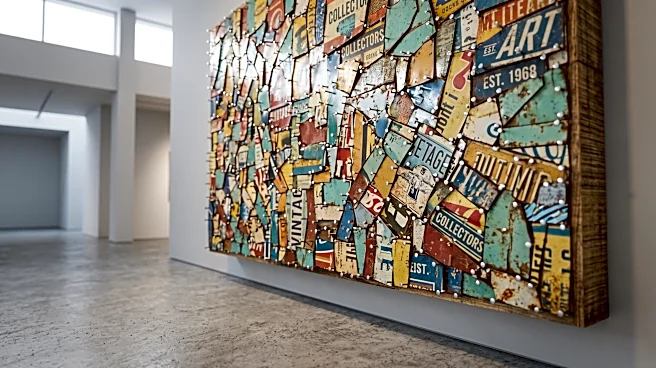
after a prolonged battle with Alzheimer’s disease. Berlant, who resided in Santa Monica for many decades, developed a distinctive artistic style using shards of printed tin, often sourced from vintage metal street signs and advertisements, which he affixed with thousands of shiny nails instead of glue. In recent years, he incorporated personal photographs printed onto metal into his works, adding narrative and autobiographical elements. His art is featured in the permanent collections of institutions such as LACMA, the Hirshhorn Museum and Sculpture Garden in Washington, and the Art Institute of Chicago.
Why It's Important?
Tony Berlant's passing marks the end of an era for the West Coast Pop Art movement, where he played a crucial role in shaping its identity and pushing artistic boundaries. His innovative use of unconventional materials like found tin and nails challenged traditional art forms and contributed to the diversification of artistic expression in the mid-20th century. His work, which blended elements of assemblage, Pop Art, and abstraction, influenced subsequent generations of artists and solidified Los Angeles's position as a significant center for contemporary art. The inclusion of his pieces in major museum collections underscores his lasting impact and the recognition of his unique contribution to American art history. His belief in L.A.'s enduring creative spirit, despite commercialization, highlights the city's continuous role as a hub for artistic experimentation.
What's Next?
Berlant's legacy will continue to be celebrated through his extensive body of work housed in prominent museum collections and private galleries. The ongoing appreciation and study of his art will likely ensure his place in art history. His contributions to the understanding and preservation of ancient Native American pottery, through his co-curation of museum exhibitions and his role as a founding member of the Mimbres Foundation, will also continue to impact archaeological and cultural studies. Discussions about the evolution of Pop Art and the distinct characteristics of the West Coast movement will undoubtedly reference Berlant's pioneering techniques and philosophical approach to art-making. His passing may also lead to renewed interest in his work and further exhibitions or retrospectives.
Beyond the Headlines
Beyond his artistic achievements, Tony Berlant's life and work offer deeper insights into the intersection of art, culture, and history. His passion for collecting ancient artifacts, such as Southwest pottery and Paleolithic stone objects, reveals a profound connection to human history and craftsmanship, which subtly informed his contemporary art practice. This interdisciplinary interest suggests a broader understanding of art as a continuous human endeavor across millennia. His involvement in the Ferus Gallery scene in the 1960s highlights the collaborative and experimental spirit that defined a pivotal moment in American art. Berlant's artistic philosophy, particularly his belief in the inherent creativity of Los Angeles, serves as a testament to the enduring power of regional art scenes to foster innovation and challenge established norms, offering a counter-narrative to the often New York-centric view of American art history.