





What's Happening?
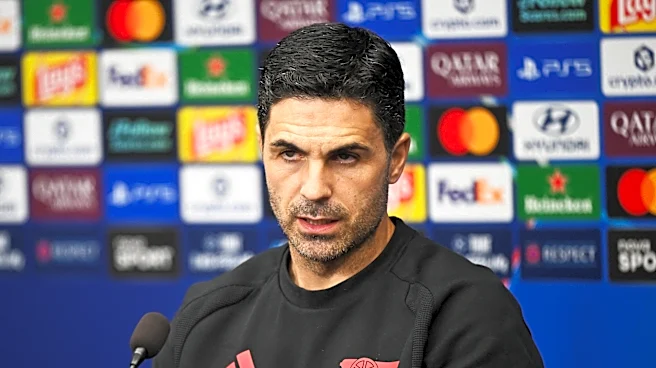
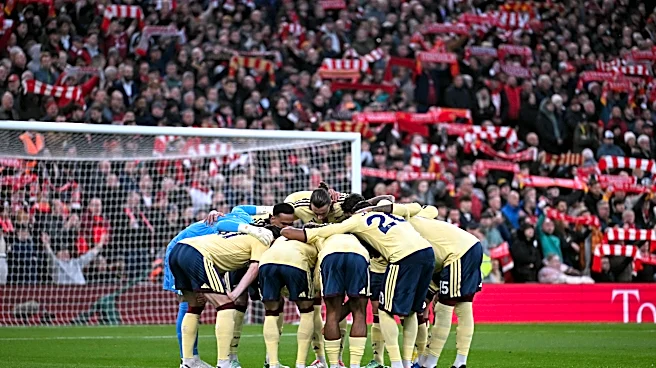
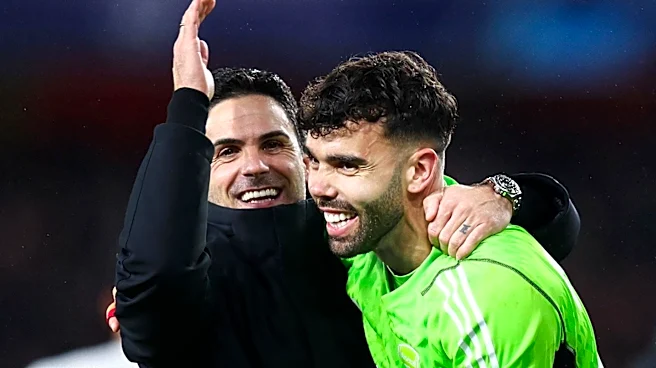
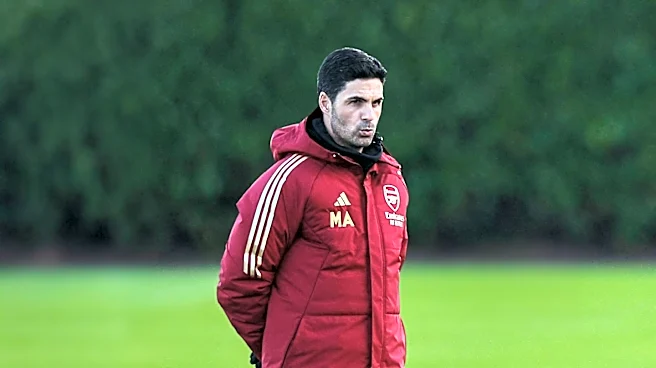
Mikel Arteta, manager of Arsenal, commended goalkeeper David Raya for his performance in a hard-fought 2-1 Champions League victory against Slavia Prague. Arsenal initially led 2-0 at halftime, but a 'poor second-half showing' allowed Slavia Prague to exert
significant pressure, forcing Raya to make a series of crucial saves. According to Yahoo Sports, Arteta stated that Raya 'had to show his quality again, much more than we expected.' The manager admitted that his side was taught a 'huge lesson' due to their drop in standards during the second half, despite ultimately securing the win and three points in Czechia.
Why It's Important?
This event underscores the critical role of individual player excellence, particularly in high-pressure moments of international sports competitions. For Arsenal, securing a win in an away Champions League fixture is vital for their campaign, and Raya's performance was instrumental in preventing a potential setback. Arteta's acknowledgment of the team's second-half struggles, despite the victory, highlights the ongoing challenge for top-tier football clubs to maintain consistent performance levels. This situation can serve as a learning experience for the team, emphasizing the need for sustained focus and tactical discipline throughout an entire match, which is crucial for success in competitive leagues and tournaments.
What's Next?
Arteta indicated that the team would learn from the 'huge lesson' presented by their second-half performance against Slavia Prague. While he praised the Gunners for handling the challenge of a tough European away game, the focus will likely shift to addressing the inconsistencies observed. The team will need to analyze the factors contributing to the drop in performance to ensure they maintain their competitive edge in upcoming matches, both in the Premier League and the Champions League. This self-assessment is crucial for their continued development and pursuit of silverware.
Beyond the Headlines
The manager's candid admission about the team's second-half struggles, even in victory, reveals the high standards and constant self-evaluation prevalent in professional sports. It suggests that a win, while positive, does not always mask underlying issues that need to be addressed. This scenario can foster a culture of continuous improvement within the team, pushing players and coaching staff to analyze and rectify weaknesses. It also highlights the psychological aspect of competition, where maintaining focus and intensity for the full duration of a match can be as critical as technical skill, especially when facing resilient opponents in demanding environments.