



What's Happening?
Industrial IoT Gateways are playing a crucial role in enhancing edge computing by processing industrial data closer to its source, rather than solely relying on cloud infrastructure. These intelligent gateways act as a connection point between industrial field
devices and higher-level platforms, performing essential functions such as real-time data acquisition, cleaning, filtering, local aggregation, and rule-based alarm processing. By processing data at the edge, these gateways reduce unnecessary data transmission, support timely local responses, and buffer data during network interruptions to ensure continuity. This approach addresses common industrial data acquisition challenges like data redundancy, network instability, and response delays, which can hinder effective data utilization. The technology is particularly valuable in environments with multiple device types, communication protocols, high-frequency data acquisition, and requirements for immediate alarm responses.
Why It's Important?
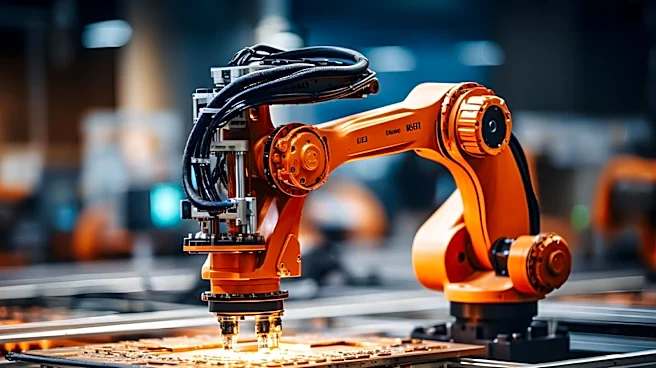
The adoption of Industrial IoT Gateways and edge computing is critical for U.S. industries, especially in sectors like manufacturing, energy management, smart buildings, and remote equipment monitoring. By enabling local data processing and rapid responses, these technologies significantly improve operational efficiency and safety. For instance, in industrial automation, connecting PLCs, sensors, and controllers to centralized systems with edge processing allows for real-time monitoring and control, preventing costly downtime and optimizing production. In energy management, immediate analysis of electricity consumption and parameters can lead to more efficient energy use. This localized approach reduces dependence on continuous cloud connectivity, making systems more resilient to network outages and ensuring that critical alerts are generated and acted upon promptly, thereby protecting assets and personnel.
What's Next?
The trend of integrating edge computing with cloud platforms is expected to continue, creating a more flexible and efficient data management architecture. While edge computing handles local processing and rapid responses, cloud computing will focus on centralized device management, long-term data storage, historical data analysis, and remote configuration. This division of responsibilities allows industrial enterprises to leverage the strengths of both models. Future developments will likely see further advancements in intelligent gateways, offering more sophisticated data processing capabilities, enhanced security features, and broader compatibility with various industrial protocols. The market will also likely see increased adoption of edge computing in new industrial applications, driven by the need for greater automation, predictive maintenance, and real-time insights.
Beyond the Headlines
The strategic implementation of Industrial IoT Gateways and edge computing extends beyond immediate operational benefits, fostering a deeper transformation in industrial data utilization. By turning raw industrial data into actionable insights at the source, these technologies empower businesses to make more informed decisions, optimize processes, and achieve real business value. This localized intelligence supports the creation of digital twins, enabling real-time feedback loops for improved operational visibility and reduced downtime. Furthermore, the ability to process data offline and ensure data continuity during network interruptions enhances the resilience of critical infrastructure, which has significant national security implications. The ethical dimension involves ensuring that the increased data collection and processing at the edge are managed responsibly, with robust security measures to prevent unauthorized access and data breaches.