






What's Happening?
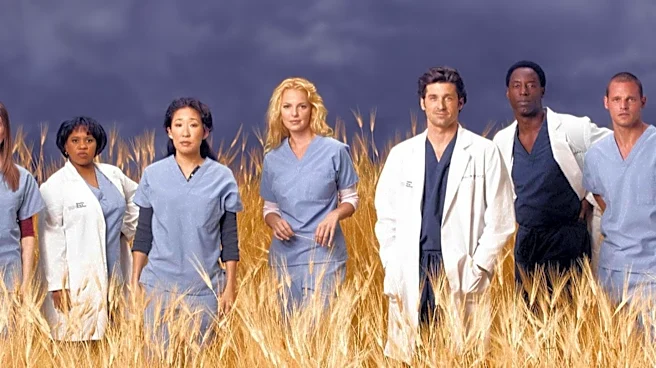
ABC's upcoming 'Grey's Anatomy' Texas-set spinoff has been significantly delayed, pushing its premiere from midseason 2027 to the 2027-2028 broadcast season. The production location has also been moved from California to Albuquerque, New Mexico. This
change stems from the series being denied California tax credits twice. Executive producer Betsy Beers testified that Shondaland, the production company, lost personnel, time, and money attempting to keep the production in Los Angeles. Beers expressed frustration that the company's long history of creating successful, long-running shows in California, which provided numerous jobs, was not considered in the tax credit application process. The denial was attributed to the new show not providing enough jobs for the state to consider it an asset. The spinoff, co-created by Shonda Rhimes and Meg Marinis, is described as an edgy drama focusing on a medical team in a rural West Texas medical center.
Why It's Important?
This development highlights the competitive landscape of film and television production incentives across U.S. states. California's tax credit program, capped at $750 million annually, is facing pressure from other states like New Mexico that offer more attractive incentives. The decision to move a high-profile production like a 'Grey's Anatomy' spinoff out of California signifies a potential shift in the industry's geographical footprint, impacting local economies, job markets for crew and talent, and ancillary businesses that support productions. For California, losing such projects means a loss of direct and indirect economic benefits, while states like New Mexico gain employment opportunities and increased economic activity. The situation also underscores the challenges new productions face in securing tax credits, even from established production houses with proven track records.
What's Next?
The 'Grey's Anatomy' Texas spinoff will now proceed with pre-production in Albuquerque, New Mexico, aiming for a 2027-2028 broadcast season debut. This move could prompt further discussions and lobbying efforts within California's entertainment industry and political circles to re-evaluate and potentially expand the state's film and television tax credit program to remain competitive. There are ongoing discussions among politicians and industry professionals about uncapping California's program and even creating a federal film tax incentive to lower production costs across the U.S. and compete with international options. The impact on the flagship 'Grey's Anatomy' series, which remains in California, has not yet been determined.
Beyond the Headlines
The relocation of the 'Grey's Anatomy' spinoff raises broader questions about the sustainability of film and television production hubs and the long-term economic strategies of states vying for these lucrative projects. It underscores a growing trend where production decisions are heavily influenced by financial incentives rather than traditional industry centers. This could lead to a more decentralized production landscape across the U.S., potentially fostering new creative communities and infrastructure in states that actively court the industry. Ethically, it also brings to light the tension between state economic development goals and the desire of production companies to maintain established workforces and creative environments. The debate over tax credits reflects a larger economic policy discussion about how states can best support and retain industries that provide significant employment and cultural output.