

What's Happening?
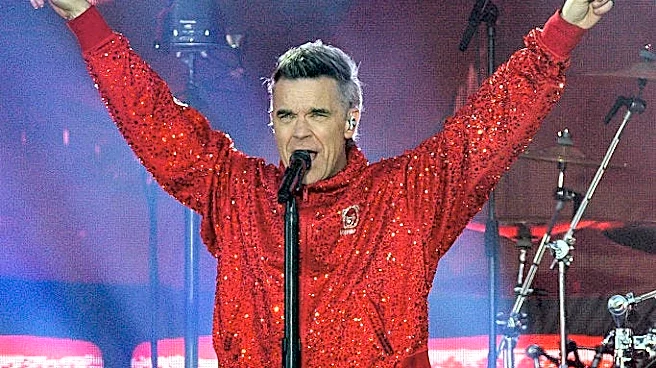
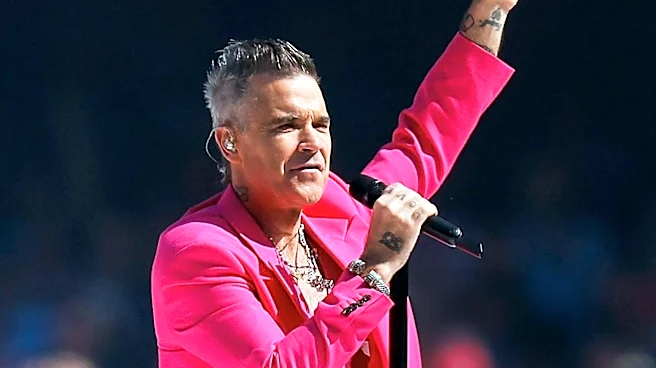
Robbie Williams has publicly defended Olivia Rodrigo following claims that her new Christmas song, 'Take Me Home (4 Christmas),' bears similarities to his 2012 hit 'Candy.' Williams addressed the controversy on Instagram, stating that he believes Rodrigo may
have 'accidentally stumbled across a musical echo' of his work. He emphasized that he is not pursuing any action against Rodrigo, expressing his view that not every perceived similarity in music should lead to legal disputes. Williams criticized what he described as 'ambulance chasing' within the music industry, where artists are often targeted for unintentional resemblances in their compositions. Rodrigo's 'Take Me Home (4 Christmas)' was released on November 5 and is her first Christmas song. Separately, musician Christopher Butler of The Waitresses confirmed that Rodrigo had contacted him, acknowledging inspiration from his band's 1981 song 'Christmas Wrapping' for her new track, which shares a similar beat and vocal style.
Why It's Important?
This situation highlights ongoing debates within the music industry regarding copyright, originality, and the nature of musical inspiration. Williams's stance, particularly his decision not to pursue legal action, could influence how similar disputes are handled in the future, potentially encouraging a more lenient approach to unintentional musical resemblances. His comments about 'frightening the creativity out of everyone' by excessively punishing artists for accidental similarities underscore a concern that stringent copyright enforcement might stifle artistic innovation. For Olivia Rodrigo, Williams's public support could mitigate potential negative publicity and legal pressures, allowing her to focus on her music. The incident also brings attention to the fine line between inspiration and infringement, a recurring challenge for artists and legal professionals in the entertainment sector.
What's Next?
While Robbie Williams has stated he will not pursue any action, the broader conversation about musical originality and copyright in the industry is likely to continue. This incident may prompt other artists and legal experts to re-evaluate existing copyright frameworks and the criteria used to determine infringement. For Olivia Rodrigo, the immediate impact is likely positive, as a prominent artist has publicly supported her. Future releases from Rodrigo and other artists might face increased scrutiny regarding their influences, potentially leading to more proactive measures to avoid perceived similarities. The discussion could also lead to industry-wide conversations about fostering creativity while protecting intellectual property rights, possibly influencing future legal precedents or industry guidelines.
Beyond the Headlines
The controversy surrounding Olivia Rodrigo's Christmas song and Robbie Williams's response touches upon deeper philosophical questions about artistic creation and originality in a world saturated with existing works. Williams's argument that 'we all stand on the shoulders of people who came before us' reflects a common understanding that art is often iterative and built upon previous influences, whether conscious or unconscious. This perspective challenges the notion of absolute originality, suggesting that some degree of 'musical echo' is inevitable. The incident also raises ethical considerations about the motivations behind copyright claims, with Williams labeling some as 'ambulance chasing.' This critique points to a potential commercialization of copyright law, where claims might be driven more by financial gain than by genuine artistic theft, potentially undermining the spirit of intellectual property protection.