

What's Happening?
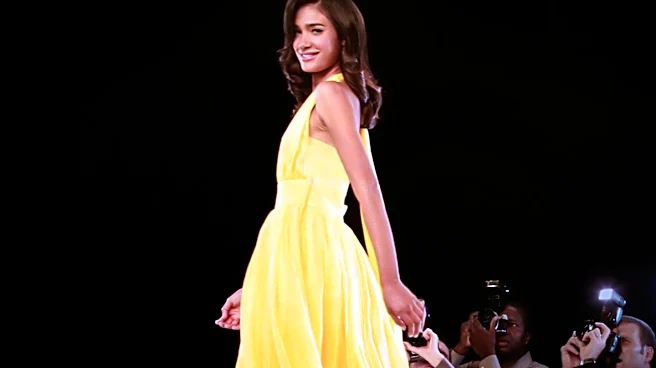
Miranda Kerr, a former Victoria's Secret Angel, revealed she declined an invitation to participate in the recent Victoria's Secret Fashion Show, which marked her 20th anniversary with the brand. Speaking on the 'Not Skinny But Not Fat' podcast, Kerr explained
that despite initially considering the offer and enjoying a recent runway appearance for Stella McCartney, she experienced significant anxiety about returning to the lingerie show. The 43-year-old model, who is a mother of four boys, described feeling a 'knot in her stomach' when contemplating being on the runway in underwear. She meditated on the feeling and concluded that declining the offer was the right decision for her, as it brought a sense of release. Kerr last modeled for Victoria's Secret in 2012 and stated that she is at a different stage in her life, distinguishing between general fashion shows and the specific nature of the Victoria's Secret event.
Why It's Important?
Miranda Kerr's decision to decline the Victoria's Secret Fashion Show invitation highlights evolving perspectives on body image, age, and career choices within the modeling industry. Her candid admission of anxiety, particularly as a mother of four in her 40s, resonates with broader societal discussions about realistic beauty standards and the pressures faced by women in the public eye. This choice underscores a shift from the traditional 'always on' mentality often associated with supermodels, emphasizing personal well-being and comfort over professional obligations or nostalgic returns. For the fashion industry, it signals a growing awareness that even established figures may prioritize their mental and emotional health, potentially influencing how brands approach casting and representation. It also contributes to the ongoing dialogue about the Victoria's Secret brand itself, which has faced scrutiny and undergone rebranding efforts in recent years to be more inclusive and reflective of diverse female experiences.
Beyond the Headlines
Miranda Kerr's decision to prioritize her personal comfort over a high-profile return to the Victoria's Secret runway delves into deeper cultural and ethical implications within the fashion and entertainment industries. Her experience reflects a growing trend where public figures are more openly discussing mental health and personal boundaries, challenging the long-held expectation that models must always conform to industry demands regardless of personal feelings. This move also subtly critiques the persistent pressure on women, particularly mothers, to maintain a certain public image or physical standard. By choosing not to participate, Kerr contributes to a broader conversation about authenticity and self-acceptance in an age dominated by curated online personas. It suggests a shift towards a more human-centered approach in celebrity culture, where vulnerability and personal well-being are increasingly valued, potentially inspiring others to make similar choices that align with their personal values rather than external expectations.