








What's Happening?
Tether, a major stablecoin issuer, has minted 119,670 XAUt tokens, its gold-backed stablecoin, valued at approximately $495 million. This significant minting event has increased XAUt's market capitalization by over 17% from $2.5 billion. XAUt, also known
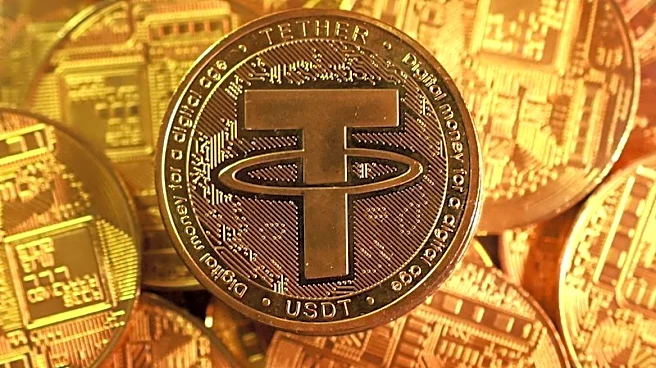
as Tether Gold, is distinct from the more common USD Tether (USDT), which is pegged to the U.S. dollar and backed by cash, Treasury bonds, and other assets. In contrast, XAUt is directly backed by one ounce of 24-karat gold held in Swiss vaults, with trackable bar serial numbers for transparency. This move represents the largest recent minting of Tether's gold-backed stablecoin and highlights a growing trend in tokenized real-world assets within the cryptocurrency market. The precious metal backing meets London Good Delivery standards, and holders have a direct claim on the physical gold.
Why It's Important?
This substantial minting of gold-backed XAUt tokens signifies increasing institutional interest and adoption of tokenized real-world assets in the crypto space. Gold-backed stablecoins offer a unique hedge against inflation, a historical role gold has played, but with the added benefits of digital assets. Unlike traditional gold investments, which can be cumbersome due to regulatory and geographical constraints, tokenized gold can be moved globally in minutes and fractionally owned, making it accessible to a wider range of investors, including those with smaller capital. The transparency provided by trackable bar serial numbers addresses a key concern in precious metal stablecoins, offering a direct claim to physical gold rather than just a promise. This development could lead to increased inflows into decentralized finance (DeFi) and centralized exchange (CEX) liquidity, further integrating traditional assets with the digital economy.
What's Next?
The continued growth of gold-backed stablecoins like XAUt suggests a potential shift in how investors approach traditional hedges and digital assets. As tokenized real-world assets mature, extending beyond gold to include stocks, bonds, and other commodities, new players are expected to enter these digitized asset classes at an accelerated pace. This trend could lead to further innovation in financial products that combine the stability of traditional assets with the efficiency and accessibility of blockchain technology. The increasing transparency standards and institutional involvement in these digital gold coins are likely to drive further adoption and potentially influence regulatory discussions around stablecoins and tokenized assets. The market will likely observe how this increased liquidity and transparency impact the broader cryptocurrency ecosystem and traditional financial markets.
Beyond the Headlines
The rise of gold-backed stablecoins like XAUt points to a deeper evolution in the concept of money and value in the digital age. By tokenizing physical gold, these assets bridge the gap between tangible, historically stable stores of value and the fluid, programmable nature of cryptocurrencies. This development challenges conventional investment methods and could democratize access to asset classes traditionally reserved for larger investors. The emphasis on transparency through trackable bar serial numbers also sets a precedent for accountability in the digital asset space, potentially influencing how other tokenized assets are structured and regulated. This convergence of traditional and digital finance could lead to new economic models, redefine investment strategies, and prompt a re-evaluation of how physical assets are owned, traded, and secured in a globally interconnected digital economy.