
What's Happening?
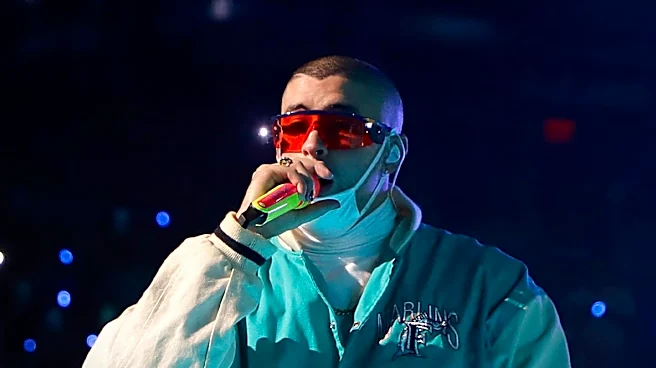
Bad Bunny's 2026 Super Bowl LX Halftime Show garnered over four billion social media views within 24 hours, encompassing content shared across official channels, broadcast partners, and other accounts.
This massive exposure translated into significant financial opportunities for the artist, despite receiving only union-scale compensation for the performance itself. Following the show, listens to Bad Bunny's music on Apple Music increased sevenfold. His album, *DeBí TiRAR Más FOToS*, subsequently appeared on Apple Music album charts in 155 countries, reaching number one in 46 of them. The performance also featured surprise appearances from Lady Gaga, Ricky Martin, Pedro Pascal, and Cardi B, with Cardi B's cameo sparking debate among prediction markets regarding its classification as a performance.
Why It's Important?
The Super Bowl Halftime Show has evolved into a major commercial spectacle, offering immense exposure for artists and significant returns for sponsors and broadcasters. For artists, the real financial gain comes after the performance, as a successful show can introduce them to millions of new fans, revive interest in older recordings, and dramatically increase streaming figures. This platform allows artists to reach audiences far beyond their typical fanbase, as exemplified by Bad Bunny's predominantly Spanish-language production celebrating Puerto Rican culture. For advertisers, the Super Bowl remains one of the few events that guarantees a massive, simultaneous audience, justifying advertising costs that can reach $8 million for a 30-second spot. The show's ability to generate ongoing conversation and social media engagement extends the value of these investments long after the broadcast.
What's Next?
The continued commercial success and cultural impact of the Super Bowl Halftime Show suggest that it will remain a highly coveted platform for artists and brands. Future halftime shows are likely to continue featuring major musical acts, with a focus on creating memorable moments that generate social media buzz and sustained public interest. The NFL and its partners will likely continue to leverage the show's broad appeal to attract top-tier talent and maximize advertising revenue. Artists will continue to view the performance as a strategic promotional campaign, prioritizing the long-term career benefits over the modest direct performance fee. The debate surrounding surprise appearances and their commercial implications may lead to clearer guidelines or new forms of engagement for future shows.
Beyond the Headlines
The Super Bowl Halftime Show's economic model highlights a shift in the music industry where live performances, particularly those with massive global reach, serve as powerful marketing tools rather than primary income generators. The show's ability to transcend traditional advertising by becoming an entertainment event in its own right underscores the evolving landscape of media consumption and audience engagement. The inclusion of diverse cultural representations, as seen in Bad Bunny's performance, also reflects a broader trend towards inclusivity in mainstream entertainment. The unexpected commercial implications of even minor celebrity cameos, such as Cardi B's, demonstrate the intricate and far-reaching economic ecosystem that now surrounds major cultural events.