




What's Happening?
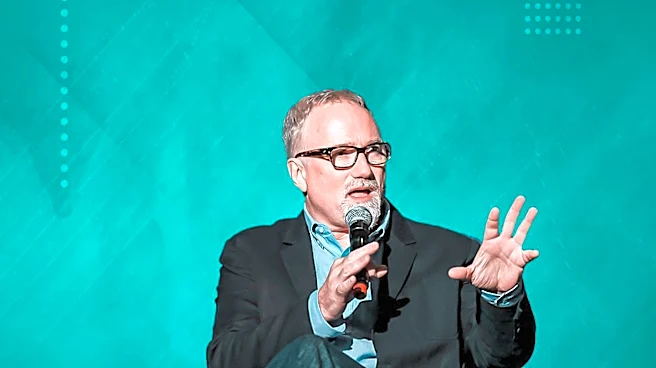
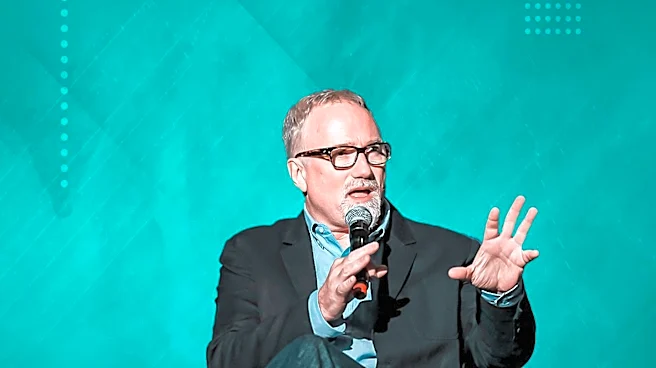
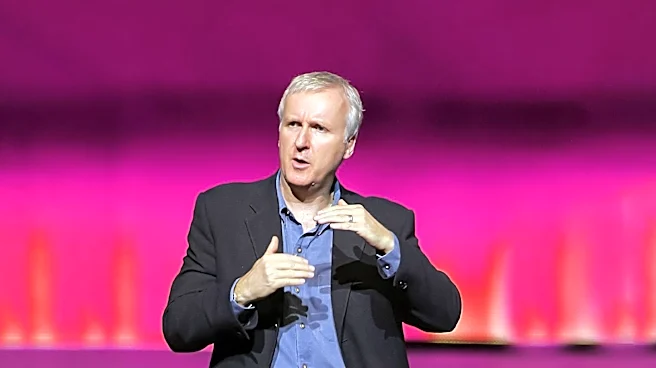
Academy Award-winning director James Cameron participated in Megacampus Dubai 2026, a global business camp that gathered 8,000 entrepreneurs from 102 countries. The five-day event, held from November 18-22, was supported by the Dubai Department of Economy
and Tourism and featured various sessions on marketing, human resources, and business growth at the Coca-Cola Arena. During a virtual conversation, Cameron shared insights on transforming ambitious ideas into reality and explored the evolving role of technology in storytelling. A significant part of his discussion focused on the potential impact of artificial intelligence (AI) on the future of filmmaking, highlighting how emerging technologies could reshape the creative and technical aspects of the industry. This event served as a platform for entrepreneurs to engage with leading figures and discuss future trends across various sectors.
Why It's Important?
James Cameron's participation in Megacampus Dubai 2026 underscores the growing intersection of technology, business, and entertainment on a global scale. His insights into the role of technology and artificial intelligence in filmmaking are particularly significant for the U.S. entertainment industry, which is a major global exporter of content and innovation. As AI continues to advance, its application in film production, from scriptwriting and visual effects to distribution and audience engagement, could lead to transformative changes. This could impact job roles, production costs, and creative processes within Hollywood and beyond. U.S. studios and tech companies are keen to leverage AI to maintain competitive advantages, while also navigating ethical considerations and potential disruptions to traditional filmmaking practices. Cameron's perspective, as a pioneer in cinematic technology, offers a glimpse into the future challenges and opportunities for American filmmakers and tech developers.
What's Next?
The discussions initiated by figures like James Cameron at events such as Megacampus Dubai 2026 are likely to fuel further research and development in AI applications for filmmaking. We can anticipate increased investment from U.S. tech companies and entertainment studios into AI-driven tools for content creation, post-production, and personalized viewing experiences. This will likely lead to new collaborations between Silicon Valley and Hollywood. Additionally, there will be ongoing debates within the industry regarding intellectual property rights, the ethical use of AI in creative works, and the potential impact on human employment in film production. Future industry conferences and technology summits will likely feature more in-depth discussions and demonstrations of AI's evolving role, influencing strategic decisions for major U.S. entertainment corporations and independent filmmakers alike.
Beyond the Headlines
The conversation around AI in filmmaking, as highlighted by James Cameron, extends beyond mere technological advancement to touch upon profound cultural and artistic implications. The increasing sophistication of AI could challenge traditional notions of authorship and creativity, raising questions about the unique human element in storytelling. If AI can generate scripts, direct scenes, or even create entire films, it could redefine the role of human artists and technicians, potentially leading to a re-evaluation of what constitutes 'art' in the digital age. This development also has legal ramifications, particularly concerning copyright and ownership of AI-generated content. The U.S. legal framework will need to adapt to these new challenges, potentially setting precedents for how AI-created works are protected and attributed globally. The long-term shift could see a hybrid model of filmmaking, where human creativity is augmented by AI, leading to entirely new forms of cinematic expression and audience engagement.