



What's Happening?
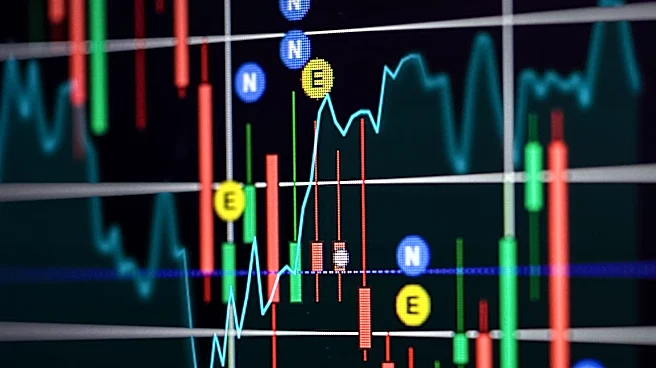
Jeremy Siegel, a finance professor at the Wharton School and chief economist at WisdomTree, has identified potential market bottom signals amidst recent volatile trading sessions. Siegel observed a 'double bottom' pattern in Nasdaq futures, where prices
rebounded sharply twice after nearing last Friday's lows. This pattern suggests that buying pressure emerged at similar price levels, indicating a potential floor for the market. His analysis comes as some AI-related stocks have experienced significant declines, with individual drops reaching 65% to 70%. Siegel also noted that while AI businesses continue to grow rapidly with high-profit margins, investor sentiment is being influenced by factors such as midterm election policy changes, compute pricing, and the outlook for the Chinese market. These elements are making AI-related stocks particularly sensitive to news and market expectations regarding infrastructure development and investment returns. The broader market is also grappling with the Federal Reserve's hawkish stance and concerns over the debt repayment capacity of AI infrastructure companies.
Why It's Important?
Siegel's observations are important for investors and market participants as they provide insights into potential turning points in the current volatile market. Identifying a 'double bottom' could signal that the most intense selling pressure might be subsiding, potentially leading to a market rebound. This is particularly relevant for the technology sector, especially AI stocks, which have seen substantial corrections. The differing returns for creditors and shareholders in AI companies, as highlighted by Siegel, underscore the varying risk profiles within the sector. If market profit expectations for AI businesses are revised upward, it could lead to greater resilience and rebound potential for these stocks, impacting investment strategies. Furthermore, the Federal Reserve's monetary policy and the financial health of AI infrastructure companies are critical factors influencing overall market stability and investor confidence, making Siegel's analysis a key indicator for future market movements.
What's Next?
Looking ahead, market participants will closely monitor whether the 'double bottom' pattern identified by Siegel holds, potentially confirming a market floor. The performance of AI stocks will be a key indicator, as their ability to rebound could signal broader market recovery. Investors will also be watching for any shifts in the Federal Reserve's stance on interest rates, as Siegel anticipates a 25-basis-point hike, which could further influence market liquidity and investor sentiment. The financial health and debt servicing capacity of AI infrastructure companies will remain under scrutiny, as any signs of distress could impact investor confidence in the broader AI sector. Additionally, the evolving geopolitical landscape and economic data, particularly regarding inflation and productivity, will play a crucial role in shaping market expectations and determining the trajectory of various asset classes in the coming weeks and months.
Beyond the Headlines
Beyond the immediate market fluctuations, Siegel's analysis touches upon deeper implications regarding the valuation and risk assessment of rapidly growing technological sectors like AI. The disparity in returns between bondholders and shareholders in AI companies highlights a fundamental tension in financing high-growth, capital-intensive ventures. This dynamic could lead to re-evaluations of investment structures and risk management practices within the tech industry. The sensitivity of AI stocks to news and policy changes also underscores the inherent volatility and speculative nature of emerging technologies, prompting questions about sustainable growth models and long-term investment strategies. Furthermore, the broader economic context, including the Federal Reserve's policy decisions and global economic outlook, will continue to shape the investment landscape, potentially leading to shifts in capital allocation towards sectors perceived as more stable or offering higher growth potential in the long run.