



What's Happening?
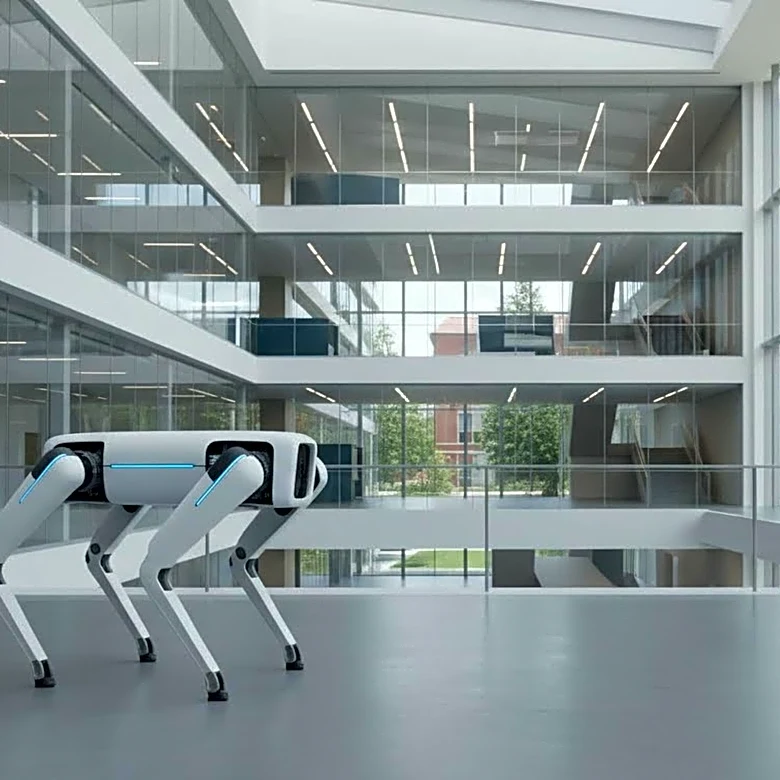
Robot dogs are being increasingly utilized in manufacturing facilities to improve efficiency and safety. These quadruped robots, such as Boston Dynamics' Spot, are designed to navigate spaces that are difficult or hazardous for humans to access. Equipped
with cameras, thermal sensors, and environmental monitoring tools, they follow predefined routes to collect data, providing a consistent view of conditions across a site. This technology allows engineers to focus on analysis and decision-making, reducing the need for manual inspections and enhancing operational insight.
Why It's Important?
The integration of robot dogs in manufacturing represents a significant advancement in industrial robotics, offering a competitive edge to early adopters. By improving data collection and reducing human exposure to dangerous environments, these robots enhance both productivity and safety. This shift also encourages manufacturers to consider their digital readiness, as the deployment of mobile robots necessitates robust network coverage and data integration. As the technology evolves, it is expected to further streamline operations and support the digital transformation of manufacturing processes.
What's Next?
As robot dogs continue to prove their value in inspection and data collection, manufacturers are likely to explore further applications tailored to specific operational challenges. The ongoing development of these platforms, including increased payload capacities and more intuitive software interfaces, will facilitate their integration into existing systems. This trend is expected to drive broader adoption of digital manufacturing technologies, positioning industries to build safer and more resilient operations.
Beyond the Headlines
The use of robot dogs in manufacturing not only enhances operational efficiency but also prompts a reevaluation of digital infrastructure. As companies adopt these technologies, they must address questions of data ownership and integration, potentially leading to broader digitalization efforts. This shift could have long-term implications for the industry, fostering innovation and setting new standards for safety and efficiency.