





What's Happening?
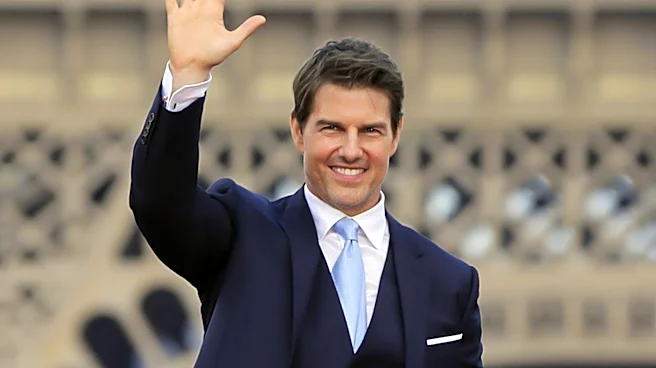
Hollywood icon Lauren Bacall, who passed away in 2014, was a vocal critic of actor Tom Cruise, according to an interview with Time Magazine. Bacall stated that Cruise's acting talent was limited and that his public behavior, particularly regarding his relationship
with Katie Holmes, was 'shocking,' 'inappropriate,' 'vulgar,' and 'unacceptable.' She believed that commercializing one's private life was a 'kind of illness.' This criticism resurfaces as Cruise's recent film, 'Digger,' is reportedly facing significant financial losses, potentially becoming one of cinema history's biggest flops, despite his long-standing status as a major Hollywood star. Cruise, now 64, has maintained a prominent career for decades, with his 'Mission: Impossible' franchise alone grossing billions.
Why It's Important?
This historical critique from a respected Hollywood figure like Lauren Bacall highlights a recurring tension within the entertainment industry: the balance between an actor's craft and their public image. Bacall's comments underscore a sentiment among some industry veterans who prioritize artistic integrity over celebrity spectacle. For Tom Cruise, despite his commercial success, such criticisms from peers can influence his legacy and how he is perceived by future generations of filmmakers and audiences. The recent performance of 'Digger' further brings into focus the challenges even established stars face in maintaining consistent critical and commercial success, especially when venturing into less conventional projects. This dynamic affects how studios approach casting and marketing, potentially influencing the types of films that get greenlit and the narratives surrounding their stars.
What's Next?
While Lauren Bacall's comments are historical, their re-emergence in the context of 'Digger's' performance could reignite discussions about Tom Cruise's acting range and public persona. Cruise has previously stated his focus is on creating lasting cinematic art rather than box-office numbers, suggesting he may continue to pursue diverse projects. The industry will likely observe how 'Digger's' financial outcome impacts his future film choices and whether it prompts any shift in his approach to public relations. For audiences, the debate over his artistic merit versus his celebrity status may continue, influencing how his upcoming projects are received. The long-term impact on his career will depend on his ability to deliver critically acclaimed and commercially successful films moving forward.
Beyond the Headlines
Bacall's strong condemnation of Cruise's public life touches upon broader ethical considerations within the entertainment industry regarding the commercialization of personal relationships. Her remarks suggest a concern for the integrity of celebrity and the potential for media exploitation to overshadow artistic contributions. This perspective raises questions about the responsibilities of public figures and the boundaries between private life and public spectacle. The ongoing discussion surrounding Cruise's involvement with Scientology has also been a point of contention, further complicating his public image. These elements contribute to a complex narrative around his career, where his undeniable box-office appeal is often juxtaposed with scrutiny over his personal choices and perceived artistic limitations, reflecting a deeper cultural conversation about fame, authenticity, and the demands placed on Hollywood stars.