



What's Happening?
Online fashion brands are rapidly evolving to meet the unique demands of Gen Z consumers, who are characterized by fast-changing trend cycles and a strong emphasis on sustainability. Brands like Edikted, Princess Polly, Cider, Depop, and ASOS are adapting
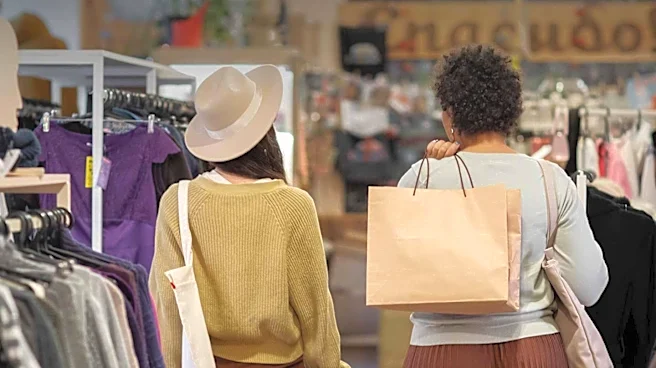
by offering frequent new arrivals, affordable pricing, and visually driven shopping experiences. Edikted, for instance, releases new styles often, drawing from street style and micro-trends. Depop stands out as a marketplace for vintage, handmade, and gently used items, appealing to Gen Z's value for sustainability and unique finds. Princess Polly focuses on polished, seasonal trends, while Cider offers bold, expressive fashion at modest price points. ASOS provides a vast selection with inclusive sizing, catering to diverse needs. These brands understand that Gen Z's fashion choices are heavily influenced by social media, where aesthetics can rise and fade within weeks.
Why It's Important?
The adaptation of online fashion brands to Gen Z's preferences is critical for their success in the U.S. retail market. Gen Z represents a significant and growing consumer base with distinct shopping habits and values. Their demand for rapid trend adoption means brands must have agile supply chains and marketing strategies. The emphasis on sustainability, particularly evident with platforms like Depop, indicates a shift in consumer priorities that can influence the entire fashion industry, pushing for more ethical and environmentally conscious practices. Brands that successfully cater to both the fast-paced trend cycle and the desire for sustainable options are better positioned to capture this demographic's loyalty and spending power, impacting market share and long-term profitability in the competitive fashion retail sector.
What's Next?
The fashion industry will likely continue to see an acceleration of trend cycles, driven by social media and Gen Z's consumption patterns. Brands will need to further invest in data analytics to predict and respond to emerging micro-trends quickly. The focus on sustainability will also intensify, leading to more brands incorporating eco-friendly materials, ethical production practices, and circular fashion models (like resale platforms). Personalized shopping experiences, leveraging AI and user-generated content, will become more prevalent. Retailers may also explore hybrid models that combine fast fashion with sustainable options to appeal to a broader range of Gen Z values. The long-term success of fashion brands will depend on their ability to remain agile, culturally relevant, and aligned with the evolving ethical considerations of this influential consumer group.
Beyond the Headlines
The Gen Z-driven shifts in fashion reflect broader cultural and economic trends. The rapid trend cycles, fueled by social media, highlight the increasing speed of cultural diffusion and the ephemeral nature of online aesthetics. This can lead to increased consumption and waste, despite Gen Z's stated interest in sustainability, creating a tension that brands must navigate. The rise of platforms like Depop also points to a growing interest in individuality and conscious consumption, challenging the dominance of mass-produced fashion. Ethically, the industry faces pressure to address labor practices in fast fashion and the environmental impact of rapid production. Culturally, Gen Z's fashion choices are a form of self-expression and identity formation, making brands that understand and facilitate this expression particularly powerful.