




What's Happening?
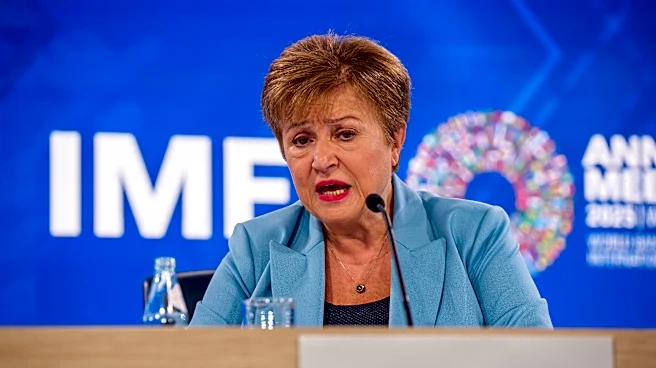
International Monetary Fund (IMF) Managing Director Kristalina Georgieva has advocated for a tighter monetary policy globally in response to escalating inflation. Georgieva attributes the inflationary pressures to a combination of energy supply disruptions
and increased demand driven by artificial intelligence (AI). Global inflation is projected to remain elevated at 4.7% in 2026, consistent with earlier forecasts, and is expected to decrease slightly to 4.1% in 2027. The IMF's assessment indicates that the global disinflation trend has stalled, necessitating central banks in many countries to implement tighter monetary policies to control rising prices and ensure economic stability. This call for tighter policy marks a shift from the easing cycle that advanced economies began in 2024.
Why It's Important?
The IMF's call for tighter monetary policy has significant implications for the U.S. economy. Higher interest rates, a common tool for tightening monetary policy, could impact U.S. consumers through increased borrowing costs for mortgages, car loans, and credit cards. Businesses might face higher costs for capital, potentially slowing investment and job creation. The U.S. economy, which has seen support from tax cuts, earlier interest rate easing, and strong AI infrastructure investment, could experience a slowdown if monetary policy becomes more restrictive. The debate over whether inflation is primarily driven by supply shocks (energy, AI) or monetary expansion is crucial for U.S. policymakers, as it dictates the most effective response. A global economic slowdown, as warned by the IMF, could also reduce demand for U.S. exports and impact multinational corporations.
What's Next?
Central banks in the U.S. and other nations are expected to consider the IMF's recommendations as they formulate their monetary policies. The Federal Reserve will likely continue to monitor inflation data, energy prices, and AI-driven demand to determine the appropriate course of action. Tighter monetary policy could lead to slower global economic growth, as projected by the IMF, which cut its 2026 global growth forecast to 3%. This could prompt further discussions among U.S. policymakers on balancing inflation control with economic growth. The ongoing conflict in the Middle East and its impact on energy markets will remain a critical factor influencing inflation and monetary policy decisions. Investors and businesses will be closely watching for signals from central banks regarding potential interest rate hikes or other tightening measures.
Beyond the Headlines
The discussion around the root causes of inflation, whether it's monetary expansion or supply shocks, highlights a fundamental economic debate with long-term implications. Critics argue that central banks may have contributed to inflation by printing too much money, raising questions about the independence and accountability of monetary authorities. The rise of AI as a significant economic driver introduces a new layer of complexity, as its demand-side effects on inflation are still being understood. This situation could accelerate the adoption of alternative assets like gold and silver as hedges against inflation, reflecting a lack of confidence in traditional financial systems. The IMF's warnings about increased risks to global financial stability, particularly after recent banking sector upheavals, underscore the fragility of the current economic environment and the need for robust regulatory frameworks in the U.S. and globally.