
What's Happening?
SEC Commissioner Hester Peirce has voiced her reservations regarding a proposed financial literacy exam intended for ordinary investors. While Peirce supports the idea of loosening existing investment
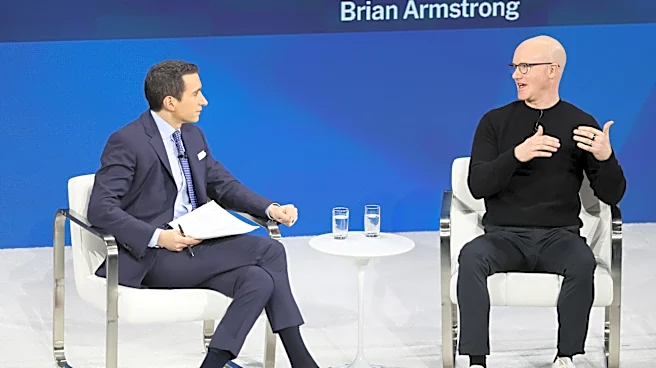
rules, she believes that implementing such a test would still position the government as a gatekeeper, according to law firm Mayer Brown. The Securities and Exchange Commission (SEC) is currently considering this exam, which is expected to consist of approximately 75 questions and carry a fee of around $100. This proposal comes amidst discussions initiated by Coinbase CEO Brian Armstrong, who advocates for replacing current wealth-based investment rules with a financial literacy test. Armstrong argues that the current system disproportionately benefits private backers in major IPOs like Anthropic and SpaceX, leaving average investors at a disadvantage as they can only participate at IPO prices, often after significant gains have already been realized by early investors. State regulators, represented by the North American Securities Administrators Association (NASAA), have expressed objections to allowing broader retail investor access to private assets, citing their illiquidity and limited disclosure as significant risks.
Why It's Important?
The debate surrounding a financial literacy exam for investors highlights a fundamental tension between investor protection and access to investment opportunities. If implemented, the exam could significantly alter who can participate in private markets and potentially early-stage IPOs, impacting retail investors' ability to access high-growth companies. Commissioner Peirce's stance underscores a philosophical divide within regulatory bodies regarding the government's role in investor participation. While proponents argue it could democratize access to lucrative private investments, critics, including state regulators, warn of increased risks for less sophisticated investors due to the opaque nature of private assets. The outcome of this deliberation could influence wealth distribution, as early access to successful companies often yields substantial returns, currently largely confined to accredited investors. The SEC's decision will set a precedent for how financial literacy is leveraged as a regulatory tool and could reshape the landscape of retail investment in the U.S.
What's Next?
The SEC is continuing to weigh the proposal for a financial literacy exam. Further discussions and potential revisions to the exam's structure, content, and fee are likely. Stakeholders, including financial industry representatives, investor advocacy groups, and state regulators, will continue to provide input, influencing the SEC's final decision. If the exam is adopted, its implementation would require significant logistical planning, including the development of testing infrastructure and clear guidelines for passing scores. Conversely, if the SEC decides against the exam, it may explore alternative methods to address concerns about investor access and protection, potentially leading to other regulatory adjustments. The ongoing dialogue between industry leaders like Coinbase CEO Brian Armstrong and regulatory bodies will shape the future of retail investment access to private markets and IPOs.
Beyond the Headlines
The discussion around a financial literacy exam touches upon broader societal questions about financial education and economic equality. If a test becomes a prerequisite for certain investments, it could inadvertently create new barriers for individuals lacking access to quality financial education, potentially exacerbating existing wealth disparities. Conversely, a well-designed exam could empower investors by ensuring a baseline understanding of financial risks and opportunities, fostering more informed decision-making. The debate also reflects evolving views on paternalism in financial regulation; while some argue for robust protections, others advocate for greater individual autonomy and responsibility. The outcome could influence the development of financial literacy programs nationwide and spark further conversations about the role of education versus regulation in safeguarding investors in an increasingly complex financial landscape.