





What's Happening?
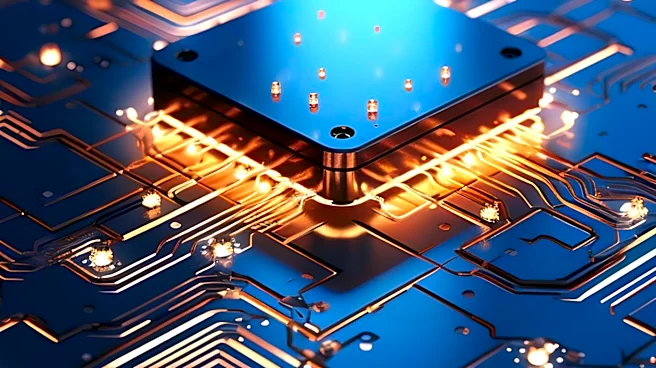
Intel has successfully raised $20 billion through an upsized share offering, surpassing its initial target of $15 billion. This move is part of Intel's strategy to fund its ambitious expansion in the chip contract manufacturing sector. The company is investing
heavily in new facilities and advanced packaging capabilities to compete with industry leaders like TSMC. The share offering was priced at $95 per share, a slight discount from the previous closing price. Intel's stock has seen a significant surge, nearly tripling this year, which has facilitated the equity raise. The funds will support Intel's plans to increase its capital expenditure and enhance its manufacturing processes, including the high-volume production of chips using its 14A process by 2028.
Why It's Important?
Intel's decision to raise $20 billion through a share sale is a critical step in its efforts to regain a competitive edge in the global semiconductor industry. The capital infusion will enable Intel to expand its manufacturing capabilities and challenge dominant players like TSMC. This move is particularly significant as the demand for advanced chips continues to grow, driven by the rise of AI and other technologies. The successful share sale reflects investor confidence in Intel's turnaround strategy and its potential to capture a larger market share. The expansion could also have broader economic implications, potentially boosting job creation and technological innovation in the U.S.
What's Next?
With the funds secured, Intel is expected to accelerate its expansion plans, focusing on building new facilities and enhancing its manufacturing processes. The company aims to secure major clients for its foundry services, with Tesla already on board as a customer. Intel's commitment to high-volume production using its 14A process by 2028 will be closely watched by industry analysts and competitors. The company's ability to execute its expansion strategy effectively will be crucial in determining its future market position. Additionally, Intel's actions may prompt responses from competitors, potentially leading to increased investments and innovations in the semiconductor industry.