




What's Happening?
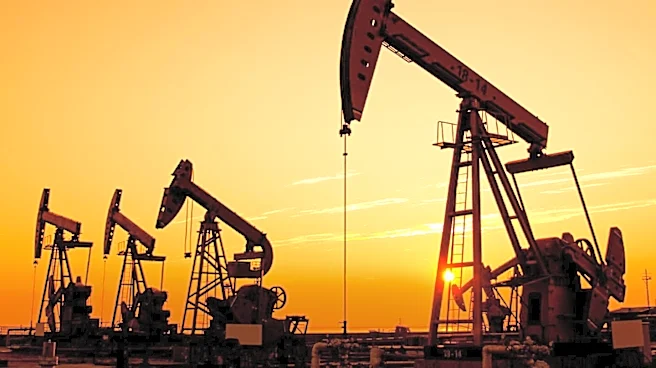
Libya's National Oil Corporation (NOC) is targeting a significant increase in oil production, aiming to reach two million barrels per day (bpd) by 2030-2031. This ambitious goal necessitates an estimated investment of $36-$40 billion, which will combine
state funding with substantial foreign capital. The investment is earmarked for various critical areas, including drilling, field redevelopment, infrastructure improvements, and overall production expansion. The Libya Energy & Economic Summit (LEES) 2027, scheduled to take place in Tripoli from January 23–25, will serve as a crucial platform to connect the Ministry of Oil and Gas, the NOC, and international operators with potential investors and financiers. This summit aims to facilitate the transition of development plans into executed projects, highlighting the country's shift towards relying more on international capital to reduce pressure on public finances. The NOC's strategy involves international companies financing major development expenditures, with production-linked cost recovery and profit-sharing structures designed to enhance project economics and shorten investor payback periods.
Why It's Important?
This substantial investment initiative is critical for Libya's economic future, as the energy sector is a cornerstone of its national revenue. Achieving the two million bpd target would significantly stabilize and boost the country's economy, providing much-needed funds for national development and potentially reducing internal political tensions often exacerbated by economic instability. For international investors, this presents a considerable opportunity to engage in a high-potential market with vast untapped resources. The shift towards international capital and production-linked financing models indicates a more investor-friendly approach, which could attract major players in the global energy sector. Success in securing this investment and achieving production targets could also have broader implications for global energy markets, potentially increasing supply and influencing oil prices. The focus on bankability, including contract protection, transparent fiscal terms, infrastructure security, and repatriation mechanisms, is vital for building investor confidence and ensuring the long-term viability of these projects.
What's Next?
The Libya Energy & Economic Summit (LEES) 2027 will be the immediate focal point for advancing these investment goals. The summit is expected to facilitate direct engagement between Libyan energy authorities and international investors, potentially leading to new agreements and partnerships. Following the summit, the NOC and the Ministry of Oil and Gas will likely focus on implementing the regulatory and policy frameworks necessary to attract and secure the targeted international investment. This includes demonstrating robust safeguards for investors, such as clear contract protections and mechanisms for profit repatriation. The success of existing projects, such as Eni’s Sabratha Compression Project and TotalEnergies' and ConocoPhillips' contributions to the Waha Concessions, will serve as precedents for future investments. Additionally, the development of downstream opportunities, including refinery rehabilitation and new processing capacity, along with renewable energy projects like TotalEnergies’ 500-MW Sadada solar project, will be key areas for future progress.
Beyond the Headlines
Beyond the immediate economic benefits, the successful execution of this investment strategy could have profound geopolitical implications for Libya. A stable and prosperous energy sector, bolstered by international partnerships, could enhance Libya's standing on the global stage and foster greater regional stability. The reliance on international capital also implies a deeper integration of Libya into the global economic system, potentially leading to increased foreign influence and a more complex web of international relations. The emphasis on bankability and investor safeguards could also signal a broader commitment to institutional reform and good governance within Libya, which is crucial for long-term stability. However, the challenge remains in navigating the country's complex political landscape and ensuring that these economic gains translate into equitable development and improved living standards for all Libyans, rather than exacerbating existing divisions.