





What's Happening?
The construction equipment market in Saudi Arabia is projected to grow at a Compound Annual Growth Rate (CAGR) of 4.71% from 2024 to 2030. This expansion is primarily fueled by the substantial investments under Saudi Vision 2030, which targets major infrastructure,
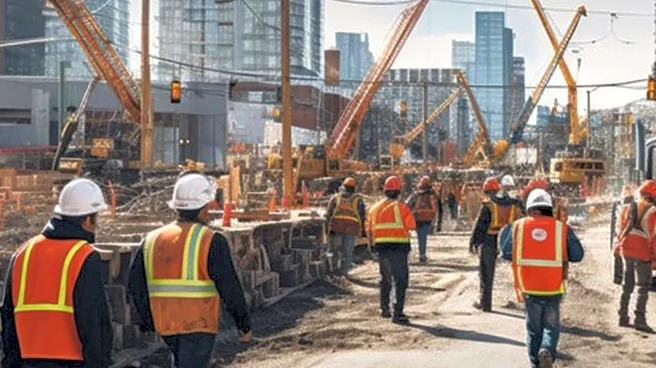
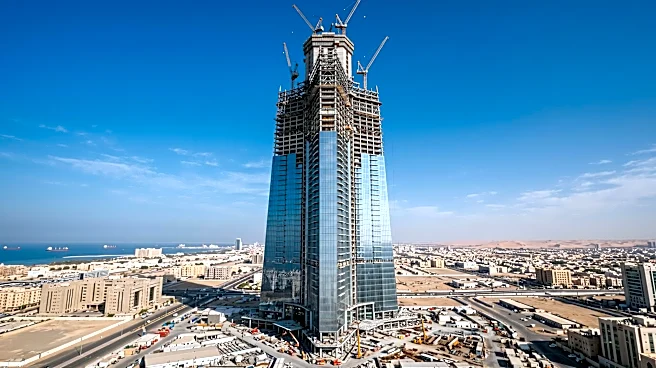
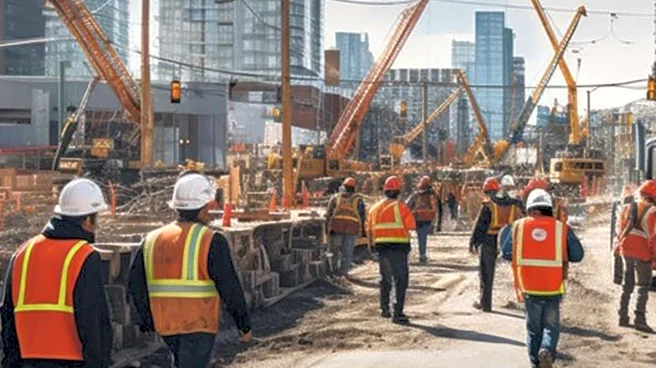
tourism, housing, and industrial development projects. Key equipment categories experiencing increased demand include excavators, loaders, cranes, and road machinery. For instance, Raimondi Cranes has reported approximately 70 tower cranes operating across various Saudi provinces. The Ministry of Municipalities and Housing has initiated a five-year housing program valued at around $43 billion, aiming for nearly 240,000 residential units by 2025, further boosting equipment demand. Additionally, investments in port expansion, warehousing, and logistics are driving the material handling equipment segment, with forklifts and telescopic handlers leading in 2025. Earthmoving equipment, particularly excavators, held the largest market share in 2025, with crawler excavators being favored due to Saudi Arabia's sandy terrain.
Why It's Important?
The robust growth in Saudi Arabia's construction equipment market signifies a broader economic transformation driven by Vision 2030. This initiative aims to diversify the Saudi economy away from oil dependence, creating vast opportunities for international and domestic businesses in the construction and manufacturing sectors. U.S. manufacturers of heavy machinery, construction technology, and related services stand to gain from this increased demand, potentially through direct sales, partnerships, or technology transfer. The focus on sustainable construction and green building projects, with nearly 2,000 such projects registered in Saudi Arabia, also opens avenues for U.S. companies specializing in energy-efficient and environmentally friendly equipment. However, challenges such as rising construction costs, supply chain disruptions, and oil price volatility could impact project timelines and equipment purchases, necessitating strategic planning for companies looking to enter or expand in this market. The competitive landscape includes established global players and a growing presence of Chinese manufacturers, indicating a dynamic market environment.
What's Next?
The Saudi Arabian construction equipment market is expected to continue its growth trajectory, driven by ongoing Vision 2030 mega-projects and sustained investment in infrastructure and residential development. Manufacturers and suppliers are likely to expand their local facilities and secure major supply contracts, as exemplified by Arabian Truck & Construction Equipment Co.'s new facility and DEVELON's supply contracts. The increasing adoption of green construction practices will likely lead to a future demand for electric and hybrid construction equipment. Companies will need to navigate potential challenges such as rising costs and supply chain issues, which could delay projects. The government's continued focus on economic diversification and industrial capacity building will ensure a steady demand for advanced machinery and equipment in the coming years.
Beyond the Headlines
The expansion of Saudi Arabia's construction sector, underpinned by Vision 2030, reflects a significant shift in global economic power and investment focus. Beyond the immediate economic impact, this development highlights the growing importance of sustainable practices in large-scale infrastructure projects, influencing global standards for construction and machinery. The competition between established Western manufacturers and emerging Chinese players in this market could lead to accelerated innovation and more competitive pricing, benefiting global consumers. Furthermore, the emphasis on localizing manufacturing and services within Saudi Arabia could foster new industrial ecosystems and skill development, contributing to long-term economic resilience and technological advancement in the region. The success of Vision 2030 could serve as a blueprint for other nations seeking to diversify their economies and modernize their infrastructure.