







What's Happening?
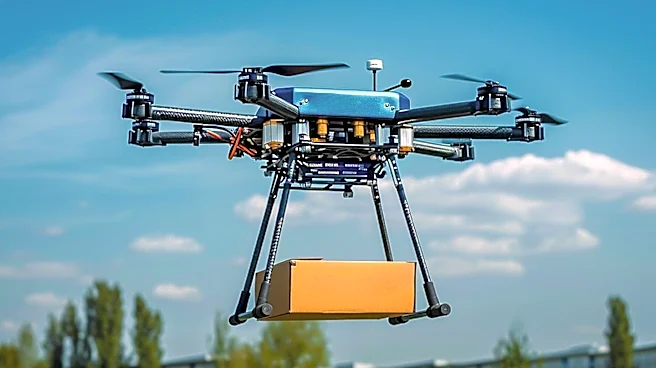
Czech start-up Zuri is preparing for the first flight of its uncrewed hybrid-electric cargo drone, which is designed to carry a 100-kilogram payload over a range of 300 nautical miles. This marks a significant step for the company as it aims to introduce
its first commercial product into the cargo market. The hybrid-electric vertical take-off and landing (VTOL) aircraft is derived from Zuri's latest technology demonstrator. The development of such drones addresses the growing demand for efficient and flexible cargo transport solutions, particularly in areas that may be difficult to access by traditional means. The company's focus on a hybrid-electric design suggests an emphasis on both performance and environmental considerations, aiming to combine the benefits of electric propulsion with the extended range capabilities of hybrid systems.
Why It's Important?
The introduction of hybrid-electric cargo drones like Zuri's could significantly impact logistics and supply chains, especially in remote or underserved regions. The ability to transport 100 kg over 300 nautical miles offers a new avenue for rapid delivery of goods, medical supplies, or critical components, bypassing traditional infrastructure limitations. This technology could reduce delivery times and costs, enhance accessibility, and potentially lower the carbon footprint of cargo operations compared to conventional aircraft or ground transport. For industries reliant on timely deliveries, such as e-commerce, healthcare, and disaster relief, these drones could provide a vital logistical advantage. Furthermore, the development of uncrewed aircraft contributes to the broader advancement of autonomous systems in aviation, potentially paving the way for more widespread adoption of drone technology in various commercial applications.
What's Next?
Following the anticipated first flight, Zuri will likely focus on rigorous testing and certification processes to ensure the drone meets aviation safety standards for commercial operation. This will involve extensive flight trials to validate performance, reliability, and safety protocols. The company will also need to secure regulatory approvals from aviation authorities, which can be a complex and time-consuming process for novel aircraft designs. Concurrently, Zuri will probably engage with potential customers and partners in the logistics and cargo sectors to demonstrate the drone's capabilities and integrate it into existing supply chains. Future developments may include scaling up production, expanding the drone's payload capacity or range, and exploring additional applications for the technology, such as specialized industrial inspections or surveillance.
Beyond the Headlines
The emergence of hybrid-electric cargo drones like Zuri's highlights a broader trend towards sustainable and autonomous solutions in aviation. This technology could challenge traditional notions of cargo transport, fostering innovation in aircraft design, propulsion systems, and operational models. The ethical and regulatory frameworks surrounding autonomous cargo flights will also need to evolve, addressing issues such as air traffic management, cybersecurity, and public acceptance of uncrewed aircraft operating in shared airspace. Moreover, the success of such ventures could stimulate further investment in advanced air mobility (AAM) and electric vertical take-off and landing (eVTOL) technologies, accelerating the transition towards a more electrified and automated future for air transport. The long-term implications could include a significant reduction in operational costs and environmental impact for cargo delivery, potentially reshaping global logistics networks.