



What's Happening?
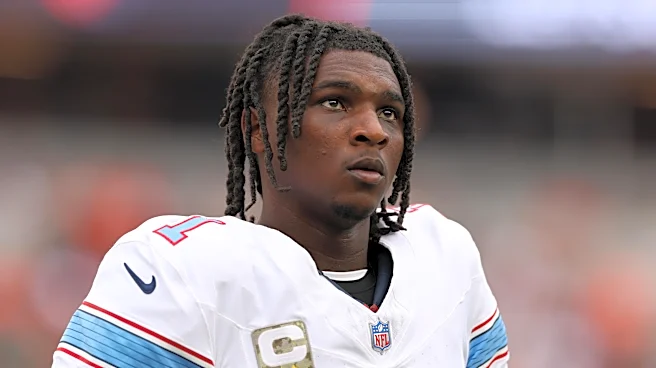
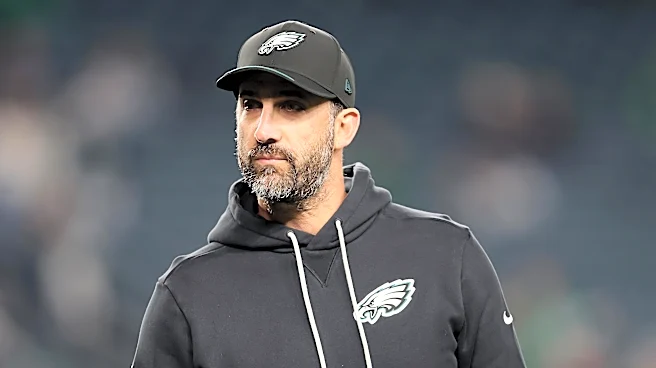
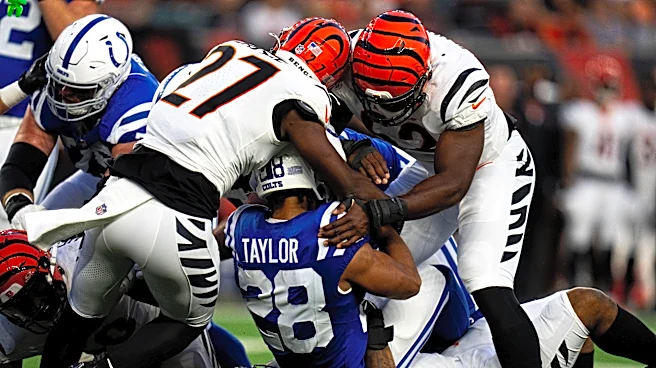
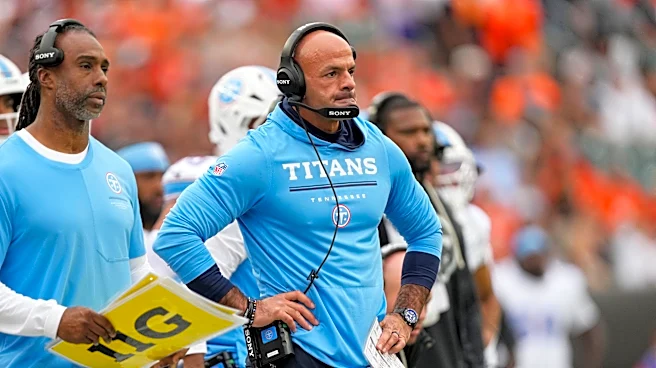
Tennessee Titans offensive coordinator Brian Daboll is facing scrutiny regarding his utilization of tight end Gunnar Helm earlier in the season. This comes after Helm delivered a standout performance in Week 8, registering a team-high 76 receiving yards
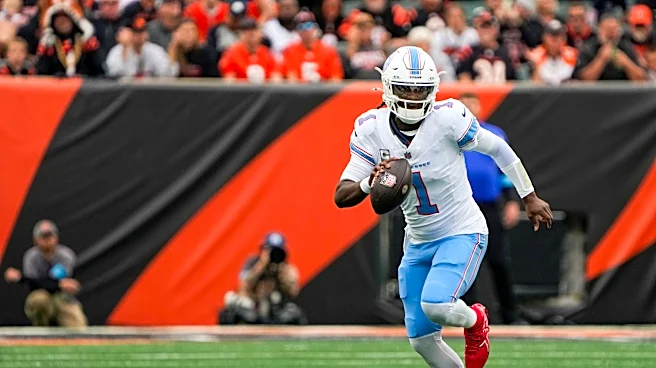
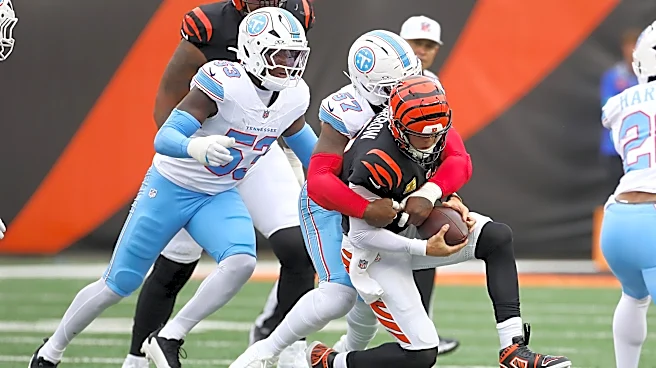
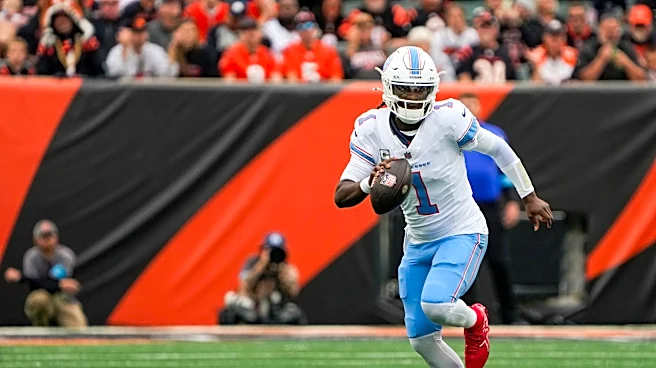
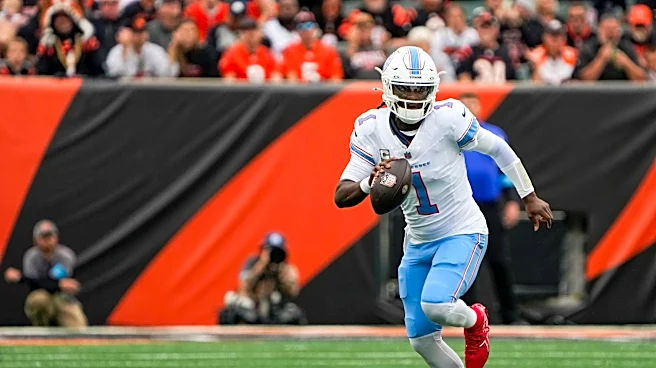
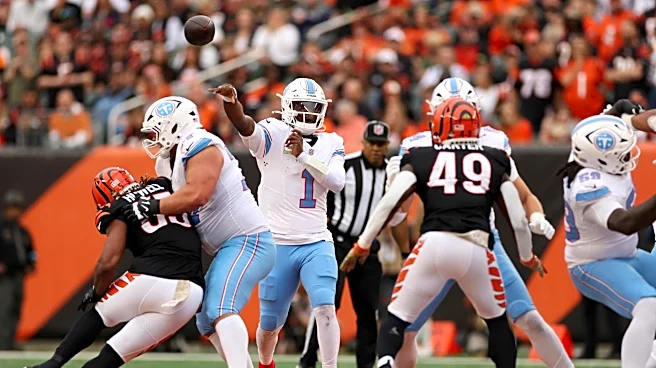
on five catches in the 43-36 overtime loss to the Cincinnati Bengals. Helm also averaged 15.2 yards per catch, with his 25-yard reception being the Titans' second-longest offensive play. This breakout game has led to questions about why Helm, a sophomore tight end, was not featured more prominently in the offense prior to this point, especially given his proven capabilities as a rookie in 2025. His increased production coincided with quarterback Cam Ward's best game of the season, suggesting a potential correlation between Helm's involvement and overall offensive effectiveness. The Titans' offense under Daboll has recently adopted a faster pace with more no-huddle plays, which reportedly suits Ward's style.
Why It's Important?
The questioning of Brian Daboll's play-calling and player utilization highlights the critical role of offensive coordinators in maximizing team performance in the NFL. Inefficient use of talent, such as Gunnar Helm's perceived underutilization, can directly impact a team's offensive output and overall win-loss record. For the Tennessee Titans, optimizing their offensive strategy is crucial, especially as they aim to build confidence in quarterback Cam Ward. A more effective offensive scheme, potentially involving greater integration of players like Helm, could lead to improved game outcomes and better development for key players. Conversely, continued questions about play-calling could put pressure on Daboll and the coaching staff, potentially affecting team morale and future strategic decisions. The success or failure of an offensive coordinator's approach can have significant financial implications for the franchise, impacting fan engagement, sponsorship deals, and player valuations.
What's Next?
Following Gunnar Helm's breakout performance, it is anticipated that the Tennessee Titans' coaching staff, particularly offensive coordinator Brian Daboll, will face increased pressure to adjust their offensive strategy to better incorporate Helm. The team's commitment to developing quarterback Cam Ward suggests that finding effective ways to utilize all offensive weapons will be a priority. Future games will likely be closely watched to see if Helm's involvement continues to increase and if the Titans' offense can sustain the momentum seen in Week 8. If the team continues to struggle despite individual player successes, it could lead to further scrutiny of Daboll's role and potentially influence personnel decisions in the offseason. The Titans' performance in the coming weeks will be crucial in determining the long-term trajectory of their offensive scheme and coaching staff.
Beyond the Headlines
The situation with Brian Daboll and Gunnar Helm underscores a broader challenge in professional sports: the balance between established coaching philosophies and adapting to individual player strengths. It raises questions about how quickly coaching staffs recognize and adjust to emerging talent, and the potential cost of delayed integration of effective players. This dynamic can influence player development, team chemistry, and ultimately, a franchise's competitive standing. The public and media scrutiny following a player's breakout performance often forces a re-evaluation of coaching decisions, highlighting the accountability inherent in high-stakes professional sports. It also touches upon the psychological aspect of player confidence, as a player like Helm, once given a larger role, can significantly impact the performance of other key players, such as the quarterback.