



What's Happening?
Alibaba Group Holding Limited (BABA) has announced better-than-expected top-line results for the second quarter of 2027. The company's performance was significantly bolstered by the accelerating adoption of its cloud services and generative AI products,
which helped to offset slower growth in its e-commerce segment. Cloud revenue growth was approximately five times faster than Alibaba's consolidated revenues, firmly establishing the cloud division as a primary growth engine for the company. Alibaba's Qwen models are noted as contributing to this momentum. Despite these positive results, the company's stock is currently trading at 9.1 times forward earnings, a valuation that reflects ongoing concerns among investors regarding ownership structures, transparency, and the potential for politically motivated interventions from Beijing.
Why It's Important?
The strong performance of Alibaba's cloud and generative AI segments highlights a significant shift in the company's revenue drivers, moving beyond its traditional e-commerce dominance. This diversification is crucial for Alibaba's long-term growth trajectory and its competitive positioning in the global technology landscape. The rapid expansion of its cloud services, coupled with investments in in-house chip development, suggests a strategic focus on high-growth, high-margin areas. However, the persistent concerns about ownership structures and potential political interference from Beijing continue to weigh on investor confidence, leading to a lower valuation compared to its growth potential. This situation underscores the broader challenges faced by Chinese technology companies in attracting and retaining international investment, as geopolitical factors and regulatory uncertainties often overshadow strong financial performance.
What's Next?
Alibaba's cloud division is expected to continue driving revenue growth and improving margins, supported by its ongoing investments in in-house chip technology. However, the company faces potential challenges, including a possible slowdown in cloud growth and intense competition in the rapidly evolving AI sector, which could necessitate costly investments. The market will closely monitor how Alibaba navigates these competitive pressures and whether it can alleviate investor concerns regarding its corporate governance and the influence of the Chinese government. Future financial reports and strategic announcements will be critical in determining if the company can achieve a higher valuation that more accurately reflects its growth engines and technological advancements.
Beyond the Headlines
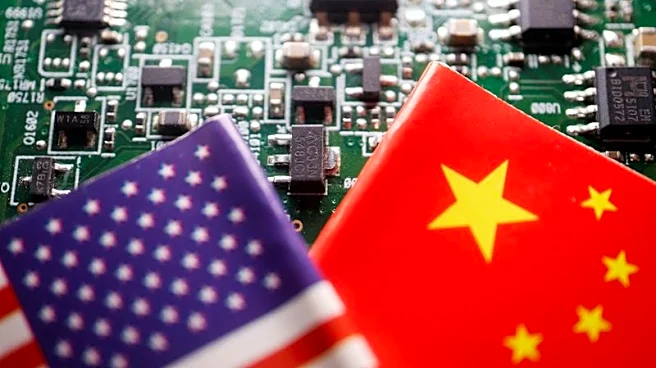
The narrative surrounding Alibaba's valuation extends beyond its financial performance, touching upon broader themes of corporate governance, state influence in private enterprises, and the geopolitical landscape affecting global investment. The 'oversold' perception, despite robust growth in key segments, indicates a deep-seated skepticism among investors about the long-term stability and autonomy of major Chinese tech firms. This situation could influence how other international companies perceive and engage with the Chinese market, potentially leading to a re-evaluation of investment strategies in regions with similar regulatory environments. The balance between innovation and state control remains a critical, underlying tension that shapes the economic future of companies like Alibaba.