




What's Happening?
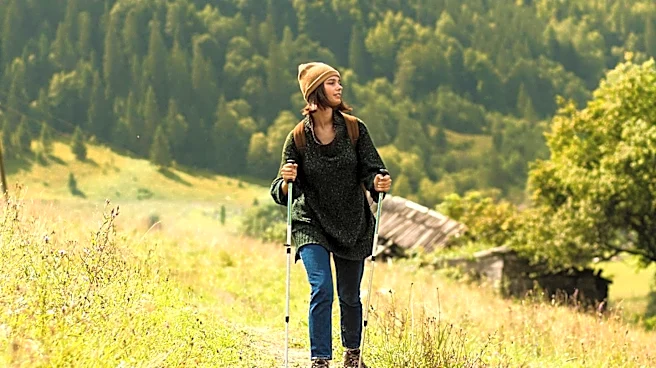
Walking holidays are gaining significant traction as an effective solution to overtourism in Europe, with UK Google searches for 'walking holiday' increasing by 60% year-on-year. This trend reflects a growing desire among travelers for more immersive
and slower travel experiences. Experts like Annie Antonatou, a walking holiday specialist, emphasize that overtourism is more about concentration than sheer numbers. Walking tours help disperse visitors across villages, trails, and lesser-known islands, rather than funneling them to crowded hotspots. This approach encourages travelers to spend more time and money in local businesses, including accommodations, bakeries, and tavernas, thereby supporting village economies. Destinations like the Amalfi Coast, Santorini, the Algarve, and the Dalmatian Coast are highlighted as prime locations where walking holidays can alleviate congestion and offer a more authentic experience.
Why It's Important?
The rise of walking holidays as an antidote to overtourism carries significant implications for the European tourism industry and local communities. By encouraging slower travel and dispersal of visitors, this trend helps mitigate the negative impacts of mass tourism, such as overcrowding, environmental strain, and the erosion of local culture. It promotes a more sustainable tourism model that directly benefits local economies, as walkers tend to engage more with small businesses and spend money in less-visited areas. This shift can lead to a more equitable distribution of tourism revenue, supporting the livelihoods of residents in smaller villages and rural regions. For travelers, it offers a more authentic and less rushed experience, fostering a deeper connection with the destination and its people, which can enhance overall satisfaction and encourage repeat visits.
What's Next?
As the popularity of walking holidays continues to grow, tour operators and local tourism boards are likely to further develop and promote these types of experiences. This could lead to the creation of new walking trails, improved infrastructure for hikers, and increased collaboration with local businesses to offer unique, authentic experiences. Destinations currently grappling with overtourism may actively invest in marketing walking holidays as a sustainable alternative, potentially shifting their tourism strategies to focus on dispersal and local engagement. There may also be a greater emphasis on off-season travel for walking tours, further alleviating pressure during peak times. This trend could also inspire policy changes aimed at supporting sustainable tourism practices, such as incentives for local guides and businesses that cater to walking tourists.
Beyond the Headlines
The embrace of walking holidays signifies a broader cultural shift in how people perceive travel, moving away from purely consumption-based tourism towards more experiential and responsible forms. This trend reflects a growing awareness among travelers about their environmental and social impact, prompting them to seek out more meaningful interactions with the places they visit. It also highlights the intrinsic value of slow travel, allowing for deeper appreciation of landscapes, cultures, and local lifestyles. Ethically, it promotes a more respectful form of tourism that prioritizes the well-being of host communities and the preservation of natural and cultural heritage. This movement could ultimately redefine the tourism industry, pushing it towards a more sustainable, community-centric, and enriching model for both travelers and destinations.