




What's Happening?
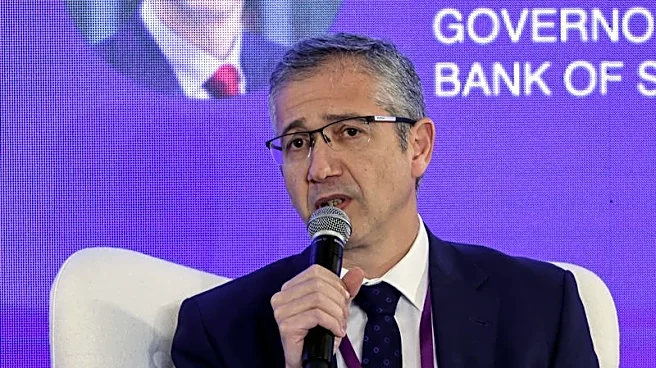
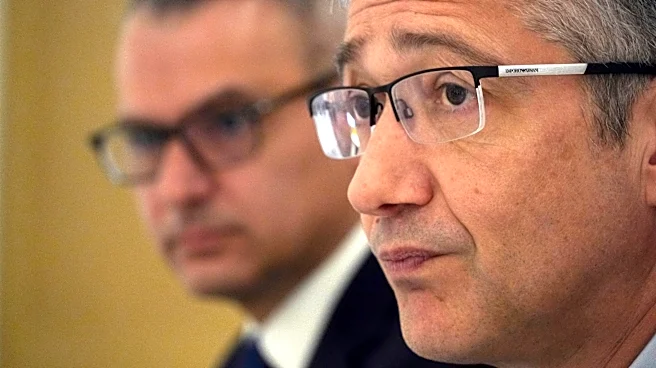
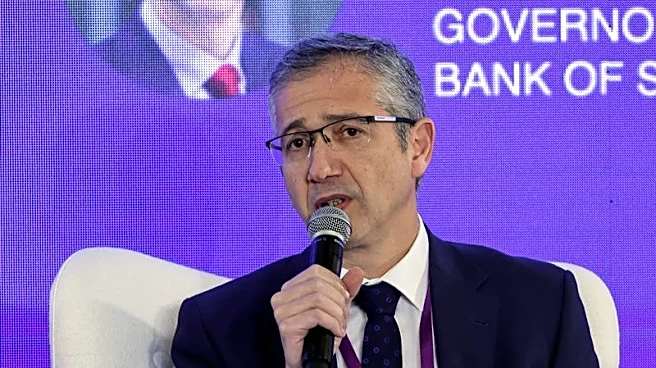
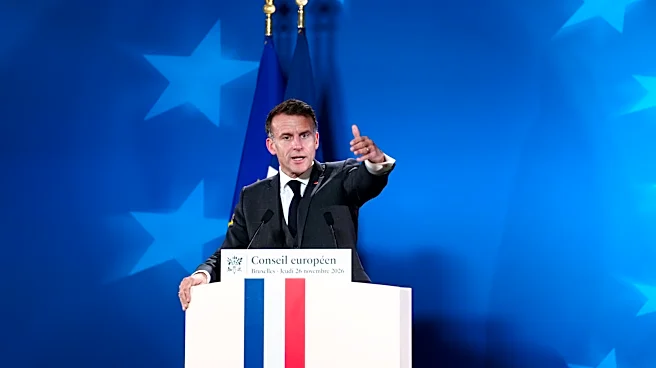
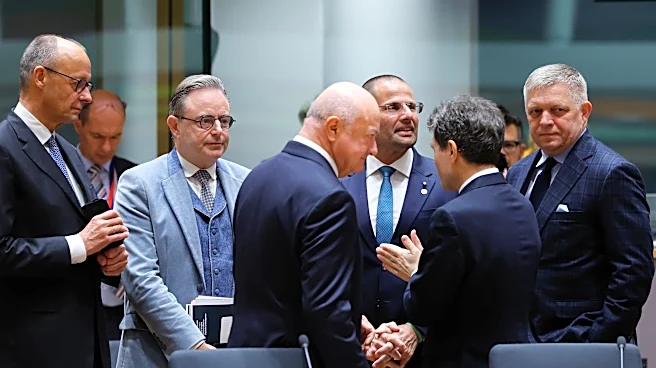
Former Bank of Spain Governor Pablo Hernández de Cos has been nominated by eurozone leaders to become the next president of the European Central Bank (ECB). This decision, reported on November 26, follows a European Council summit where de Cos received
backing to succeed Christine Lagarde, who is scheduled to step down on February 7, 2027. The nomination still requires formal appointment after consultation with the European Parliament and the ECB's Governing Council, though neither body holds veto power. De Cos, a 55-year-old economist and career central banker, served as Governor of the Bank of Spain from 2018 to June 2024, chaired the Basel Committee on Banking Supervision from 2019 to 2024, and has been General Manager of the Bank for International Settlements since July 2025. His appointment is part of a broader 'package deal' that aims to balance representation from northern and southern European countries on the central bank's six-member Executive Board.
Why It's Important?
The appointment of Pablo Hernández de Cos to lead the ECB is significant for the eurozone's monetary policy, particularly as the region grapples with higher inflation, economic divergence, and political uncertainty. His leadership will be crucial in navigating these challenges, which include a recent surge in euro area inflation to four percent in October, largely driven by energy prices. De Cos's record suggests a moderately dovish approach, favoring lower interest rates to support economic growth, yet he is also described as a pragmatist willing to adapt, having supported strong rate hikes during past energy price shocks. His selection is seen as a signal of Europe's commitment to price stability and maintaining the euro as a hard currency. The 'carefully crafted package deal' for the Executive Board also highlights the ongoing political negotiations and the need for consensus among major European economies to ensure stable leadership and policy direction for the central bank.
What's Next?
Following the nomination, Pablo Hernández de Cos's appointment will proceed to formal consultation with the European Parliament and the ECB's Governing Council. While these bodies do not have veto power, their input is a necessary step in the process. De Cos is expected to assume office after Christine Lagarde's departure on February 7, 2027, for an eight-year term. Upon taking the helm, he will immediately face the task of addressing persistent high inflation in the euro area, which has been exacerbated by rising energy costs. He will also need to manage concerns over the economic stability of member states, particularly France, which is experiencing mounting public debt and a contracting economy. Additionally, de Cos will inherit major supranational projects, including the development of a digital euro and the long-delayed integration of Europe's capital markets.
Beyond the Headlines
The selection of Pablo Hernández de Cos as ECB president extends beyond immediate monetary policy, reflecting a strategic effort to maintain stability and consensus within the eurozone's financial leadership. His background as a 'central banker's central banker' and his ability to earn respect from both hawkish and dovish observers suggest a potential for balanced leadership during a period of complex economic and political pressures. The 'package deal' approach to filling key positions on the Executive Board underscores the intricate political dynamics at play, where major economies like Germany, France, Italy, Spain, and the Netherlands vie for representation. This careful balancing act aims to prevent internal divisions from undermining the ECB's effectiveness. The long-term implications include the potential for a more unified approach to economic challenges, but also the ongoing tension between national interests and the broader eurozone's financial health, particularly as the ECB navigates the future of digital currencies and capital market integration.