





What's Happening?
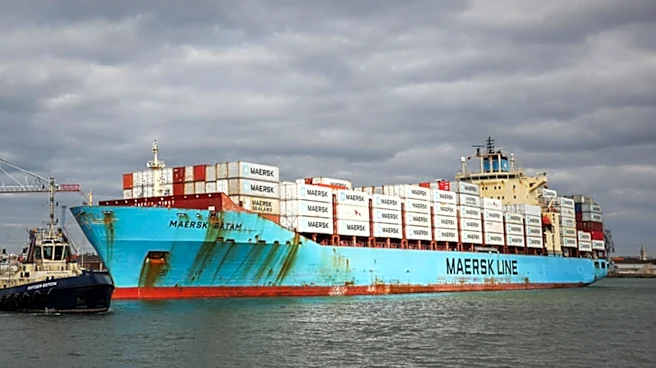
Shipping giant A.P. Moller – Maersk, in collaboration with Lloyd’s Register, the U.S. Port of Charleston, and the UK’s Port of Felixstowe, is undertaking a feasibility study for a nuclear-powered container shipping route. This initiative, dubbed the 'Pink
Corridor,' aims to identify and address the operational, security, and safeguarding requirements necessary for such a route. The study will cover aspects like ship security, nuclear safeguards, cyber resilience, emergency response, and insurance arrangements. It will initially assess how practical and regulatory requirements can be aligned to facilitate nuclear-powered commercial shipping, using a conceptual nuclear-powered vessel rather than a real one. This project builds upon a 2024 regulatory assessment study by Lloyd’s Register and Core Power, which examined the safety, operational, and regulatory needs for applying advanced nuclear power to container shipping.
Why It's Important?
This exploration of nuclear-powered shipping represents a significant step towards decarbonizing the maritime industry, a sector heavily reliant on fossil fuels. For the U.S., particularly the Port of Charleston, participating in this study positions it at the forefront of sustainable shipping innovation. The development of such a route could reduce carbon emissions from transatlantic trade, aligning with global climate goals and potentially setting new standards for international shipping. Successful implementation could also enhance energy security by diversifying fuel sources for maritime transport, reducing dependence on volatile oil markets. Furthermore, it could spur technological advancements in nuclear propulsion and related safety protocols, creating new economic opportunities and expertise within the U.S. maritime sector and its partners.
What's Next?
The 'Pink Corridor' project will continue its feasibility study, focusing on a practical, collaborative approach to examine the security and safeguards required for safe operations of nuclear technology in merchant shipping. This initiative is expected to support broader maritime development under the US-UK Technology Prosperity Deal, providing a foundation for future collaboration between the two nations. The Port of Felixstowe has expressed its commitment to supporting the 'Pink Corridor' by contributing practical insights, indicating ongoing engagement from port authorities. The project's findings will be crucial in determining the next steps, including potential pilot programs or further regulatory frameworks needed to advance nuclear-powered commercial shipping. The focus will remain on aligning practical and regulatory requirements to enable this innovative approach to sustainable maritime operations.
Beyond the Headlines
The exploration of nuclear-powered shipping carries profound implications beyond immediate decarbonization efforts. It raises complex ethical and legal questions regarding the transport of nuclear materials, waste management, and the potential for accidents or security breaches in international waters and ports. The 'Pink Corridor' project, by addressing security and safeguards, is implicitly navigating these challenges. Furthermore, the adoption of nuclear technology in commercial shipping could trigger a significant shift in global maritime power dynamics, potentially favoring nations with advanced nuclear capabilities and robust regulatory frameworks. This could lead to new international agreements and standards for nuclear shipping, influencing geopolitical relationships and trade routes. The long-term success of such initiatives will depend not only on technological feasibility but also on public acceptance, international cooperation, and the establishment of comprehensive safety and security protocols that address global concerns.