







What's Happening?
Taiwan Semiconductor Manufacturing Co. (TSMC) is reportedly planning to increase prices for its advanced chip packaging services, specifically its Chip on Wafer on Substrate (CoWoS) process, by 10% to 20%. This potential price hike is attributed to a significant
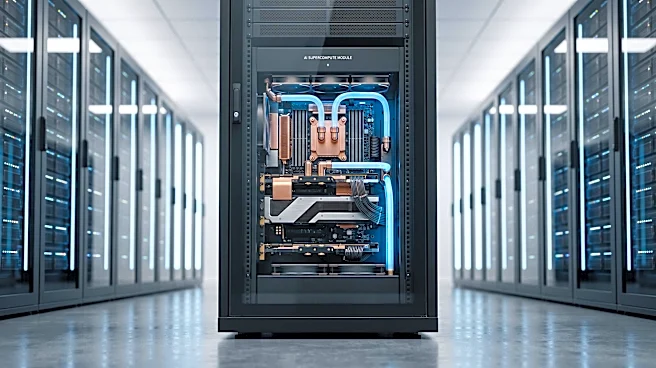
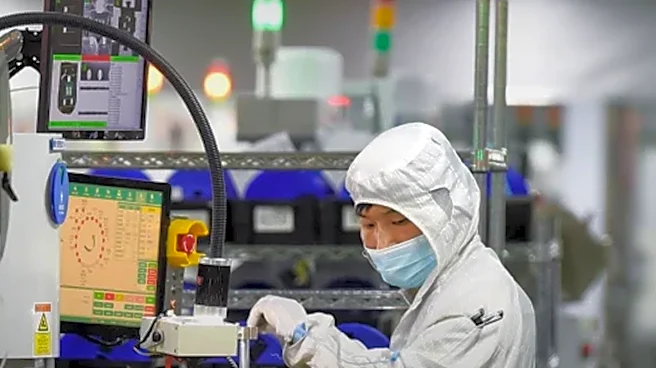
surge in demand for AI chips, which is straining TSMC's production capacity for advanced packaging. The CoWoS technology integrates AI chips and high-bandwidth memory (HBM) into a single package, a critical component for high-performance computing. According to Taiwan's China Times, citing supply-chain sources, this move would impact major chip firms like Nvidia Corp (NVDA) and Advanced Micro Devices (AMD), potentially raising their production costs. TSMC is the world's largest contract chipmaker, manufacturing advanced chips for various applications, from AI data centers to smartphones, with key customers including Broadcom, Qualcomm, and MediaTek. The company is actively ramping up its advanced packaging operations, with monthly CoWoS capacity projected to exceed 130,000 units in 2026 and 200,000 units in 2027.
Why It's Important?
This potential price increase by TSMC carries significant implications for the U.S. technology sector and the broader economy. As a primary supplier of advanced semiconductors, TSMC's pricing adjustments directly affect major U.S. tech giants that rely on its manufacturing capabilities for their AI chips and other high-end processors. Companies like Nvidia and AMD, which are at the forefront of AI development, could face higher production costs, potentially leading to increased prices for their products. This could, in turn, impact the cost of AI infrastructure and devices, affecting businesses and consumers. Furthermore, the report highlights the intense demand for advanced packaging, underscoring the critical role of TSMC in the global semiconductor supply chain and the ongoing challenges of meeting the escalating needs of the AI industry. The increased costs could also put pressure on consumer electronics, such as Apple's iPhones and MacBooks, which have already seen price increases due to rising memory chip costs.
What's Next?
Should TSMC proceed with the price increase, major U.S. chip designers and technology companies will likely need to adjust their cost structures and potentially pass on these increased expenses to their customers. This could lead to a ripple effect across the technology supply chain, influencing pricing strategies for AI hardware, data center components, and consumer electronics. The move may also prompt further investment in advanced packaging technologies by other players in the semiconductor industry, as companies seek to diversify their supply chains and mitigate reliance on a single dominant provider. Additionally, the continued strain on advanced packaging capacity could accelerate efforts by governments and companies to bolster domestic semiconductor manufacturing capabilities, including packaging, to enhance supply chain resilience. The market will closely watch for official announcements from TSMC regarding these pricing adjustments and the subsequent reactions from its key customers and the broader industry.
Beyond the Headlines
The reported price hike by TSMC underscores a deeper trend in the semiconductor industry: the increasing strategic importance and cost of advanced packaging. While much attention is often given to chip design and fabrication, the ability to efficiently package complex chips with high-bandwidth memory is becoming a critical bottleneck and a key differentiator. This development highlights the intricate interdependencies within the global technology ecosystem, where a pricing decision by one foundational company can have far-reaching economic consequences. It also brings to the forefront the geopolitical implications of semiconductor manufacturing, as nations increasingly recognize the strategic value of controlling advanced chip production and packaging capabilities. The ongoing demand surge for AI chips is not just a technological phenomenon but also a significant economic driver, reshaping supply chains and investment priorities worldwide, with potential long-term impacts on innovation, competition, and national security.