



What's Happening?
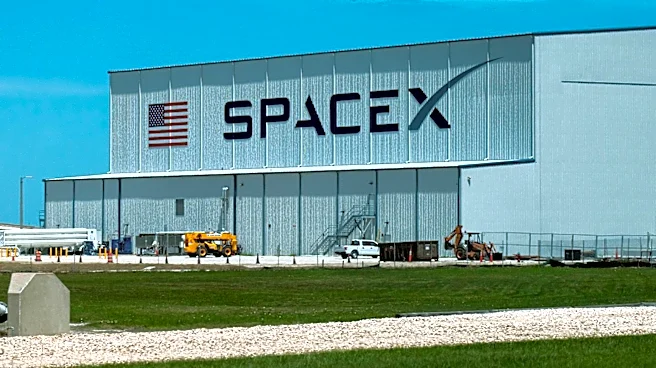
SpaceX, led by Elon Musk, is reportedly pursuing customer and operational data from defunct and struggling startups to enhance its AI training efforts. These discussions are currently informal and may not result in confirmed deals, according to a Bloomberg
report. If successful, this initiative would provide SpaceX with valuable AI training data at potentially affordable rates. This strategy mirrors Google's recent acquisition of Spirit Airlines' business data for $10 million from a bankruptcy auction to train its Gemini models, a move that triggered privacy concerns due to the inclusion of employee conversations and company emails. SpaceX aims to use this acquired data, along with its own extensive internal data, to train its Grok AI models, developed by its subsidiary xAI. The company plans to release Grok 4.7 this month and Grok 5 later this year, with Musk expressing high expectations for Grok 5's engineering capabilities.
Why It's Important?
This development highlights the escalating 'AI race' and the critical demand for vast amounts of training data to develop advanced artificial intelligence models. SpaceX's reported strategy of acquiring data from failed startups underscores a growing trend where companies are exploring unconventional and potentially controversial methods to gain a competitive edge in AI. The privacy concerns raised by Google's similar acquisition of Spirit Airlines' data are directly relevant here, as the collection of customer and operational data from defunct companies could involve sensitive information. This practice could set a precedent for how data from bankrupt or struggling entities is valued and utilized, potentially impacting data privacy regulations and corporate ethics across the U.S. tech industry. The success of Grok 5, powered by this diverse data, could significantly influence the AI landscape, potentially challenging established players like Anthropic, OpenAI, and Meta.
What's Next?
The informal discussions between SpaceX and struggling startups regarding data acquisition will likely continue, with potential deals emerging if terms are agreed upon. The outcome of these negotiations will determine the extent and nature of the data SpaceX can integrate into its AI models. The release of Grok 4.7 and Grok 5 later this year will be a key milestone, as the performance of these models, particularly Grok 5 with its incorporation of SpaceX's entire data corpus, will be closely watched. This could lead to increased scrutiny from privacy advocates and regulatory bodies regarding the ethical implications of acquiring and utilizing data from defunct companies. The broader AI industry will also observe SpaceX's approach, potentially influencing other companies to adopt similar data acquisition strategies, further intensifying the debate around data privacy and AI development ethics.
Beyond the Headlines
The pursuit of data from failed startups for AI training delves into complex ethical and legal dimensions surrounding data ownership and privacy, especially when a company ceases to exist. While the data might be considered an asset of a bankrupt entity, its original collection often came with implicit or explicit privacy agreements with customers and employees. The transfer and repurposing of such data for AI training, particularly without explicit consent from the original data subjects, raises significant questions about data stewardship and the 'right to be forgotten.' This trend could lead to a re-evaluation of data privacy laws and bankruptcy proceedings to better protect individual data in the event of corporate failure. Furthermore, the idea that 'all the data that SpaceX has ever produced' will be incorporated into Grok training highlights the immense value placed on proprietary data in the AI era, potentially creating new forms of digital monopolies and exacerbating existing power imbalances in the tech industry.