



What's Happening?
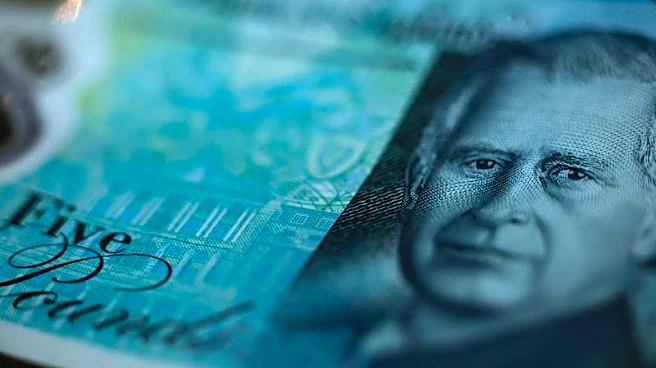
The British pound has experienced multi-month lows against the U.S. dollar, despite market expectations of aggressive interest rate hikes by the Bank of England (BoE). According to Fiona Cincotta, StoneX Senior Market Analyst, these rate hike bets are
leaving sterling vulnerable because tighter monetary policy threatens to further slow a UK economy already grappling with elevated energy bills and food prices. Markets are currently pricing in an approximately 80% probability of a 25-basis-point hike at the BoE's next policy decision, with further tightening anticipated. This aggressive pricing is seen as a risk, as higher borrowing costs could impede economic growth. The UK economy is trailing the U.S., which is showing annualized growth of around 3.5%, contributing to the dollar's strength against the pound.
Why It's Important?
The situation highlights a critical challenge for the UK economy and its currency. While rate hikes are typically intended to combat inflation and strengthen a currency, in this instance, they are perceived as a potential drag on an already struggling economy. UK households are facing significant financial pressure from a four-year high in the energy price cap, rising food costs, and the prospect of increased borrowing costs due to BoE rate hikes. This combined strain is expected to weigh heavily on consumer spending and overall economic growth. For U.S. businesses and investors with exposure to the British pound, this scenario suggests continued volatility and potential depreciation of sterling, impacting trade, investment, and financial returns. The divergence in economic performance between the U.S. and the UK further underscores the challenges facing the BoE in balancing inflation control with economic stability.
What's Next?
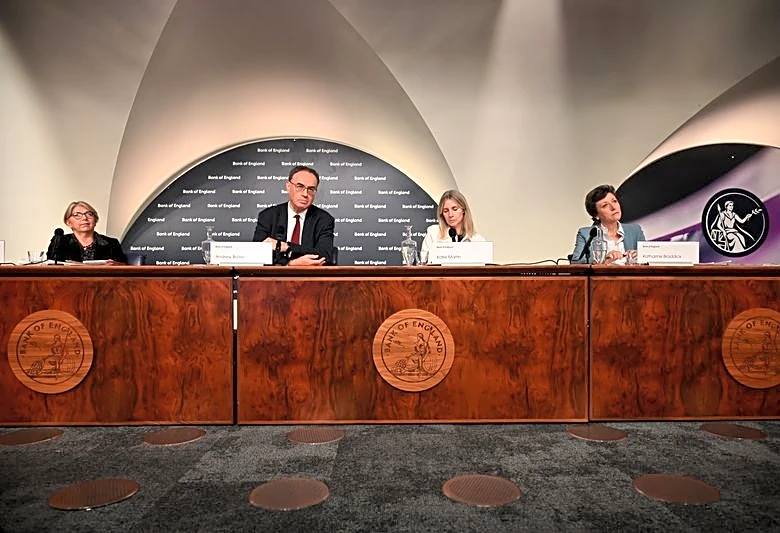
Future developments will largely depend on the Bank of England's upcoming policy decisions and the trajectory of UK economic indicators. The market will closely monitor the BoE's next policy meeting for confirmation of the anticipated 25-basis-point hike and any forward guidance on future tightening. Testimony from BoE policymakers, such as Andrew Bailey and Catherine Mann, before UK lawmakers will also be crucial in shaping market expectations. On the U.S. side, core PCE inflation readings will influence Federal Reserve hike expectations, which in turn will impact the U.S. dollar's strength against the pound. The ongoing strain on UK households from energy and food prices, coupled with rising interest rates, will likely continue to be a significant factor influencing the UK's economic outlook and the pound's performance.
Beyond the Headlines
This situation underscores the complex interplay between monetary policy, inflation, and economic growth in a globalized financial system. The Bank of England's dilemma reflects a broader challenge faced by central banks worldwide: how to tame inflation without triggering a severe economic downturn. The UK's specific vulnerabilities, such as its reliance on energy imports and the impact of global supply chain disruptions, amplify these challenges. The potential for aggressive rate hikes to exacerbate household financial stress and stifle economic activity raises questions about the optimal approach to monetary policy in an environment of stagflationary pressures. This could lead to a re-evaluation of conventional economic models and a greater emphasis on fiscal measures to support vulnerable populations while central banks address inflation.