



What's Happening?
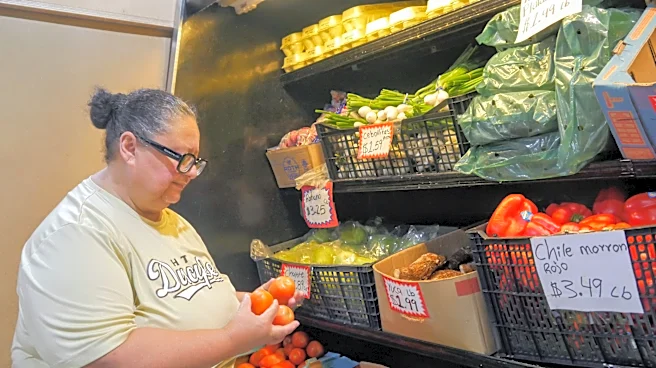
Recent data from Bank of America indicates a shift in the K-shaped spending patterns that have characterized the U.S. economy. Historically, higher-income households have been spending more robustly compared to their lower-income counterparts. However,
recent reports suggest that spending growth among lower-income households has begun to outpace that of higher-income households, excluding gasoline expenditures. This change is attributed to improvements in the labor market and adjustments in tax withholding from recent legislation. Despite rising gas prices, which could impact future spending, the current trend shows a narrowing gap in spending behaviors across different income levels.
Why It's Important?
The shift in spending patterns is significant as it may signal a more equitable economic recovery, potentially reducing the economic divide between different income groups. If sustained, this trend could lead to increased consumer confidence and spending across a broader demographic, which is crucial for economic growth. However, the potential for rising gas prices and reduced food stamp benefits could reverse these gains, particularly affecting low-income households. Policymakers and businesses must monitor these trends closely to address potential challenges and support sustained economic recovery.
What's Next?
The continuation of this trend will depend on several factors, including the stability of the labor market, inflation rates, and government policy changes. Rising gas prices and reduced food stamp benefits could pressure lower-income households, potentially reversing the current trend. Policymakers may need to consider additional measures to support these households and sustain economic growth. Businesses might also adjust their strategies to cater to changing consumer behaviors across different income groups.