



What's Happening?
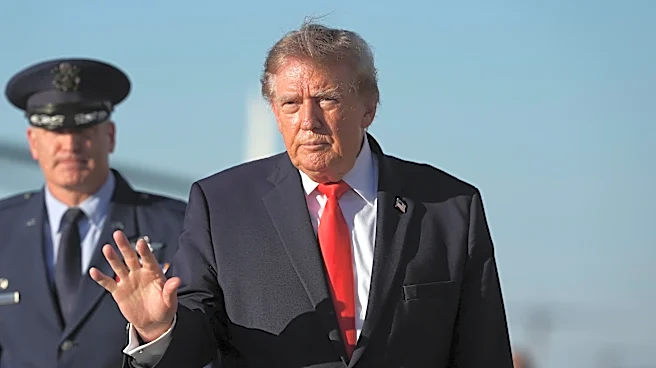
On November 17, 2026, in Manila, Philippines, President Donald J. Trump and Prime Minister Anutin Charnvirakul of the Kingdom of Thailand confirmed the substantial conclusion of negotiations for an Agreement Between the United States of America and the Kingdom of Thailand on Reciprocal
Trade (ART). This agreement aims to strengthen the bilateral economic relationship between the two nations, building upon existing frameworks such as the 1966 Treaty of Amity and Economic Relations and the 2002 Trade and Investment Framework Agreement. Both countries will now proceed with their respective internal processes to prepare the ART for signature and entry into force.
Why It's Important?
The conclusion of negotiations for the Reciprocal Trade Agreement signifies a deepening of economic ties between the United States and Thailand. This agreement is expected to facilitate trade and investment, potentially leading to increased market access for U.S. businesses in Thailand and vice versa. For U.S. industries, this could mean new opportunities for exports and foreign direct investment, contributing to economic growth and job creation. The ART's focus on reciprocal trade suggests a balanced approach designed to benefit both economies, fostering a more stable and predictable trade environment. This development also reinforces the U.S.'s economic engagement in Southeast Asia, a strategically important region for global trade and supply chains.
What's Next?
Following the substantial conclusion of negotiations, both the United States and Thailand will undertake necessary internal processes to finalize the agreement. This typically involves legal reviews, domestic approvals, and potentially legislative actions in each country before the ART can be formally signed and enter into force. The timeline for these internal processes is not specified but will determine when the agreement officially takes effect and its provisions begin to impact bilateral trade and investment. Once implemented, the ART will likely lead to new trade policies and regulations that businesses in both countries will need to navigate.
Beyond the Headlines
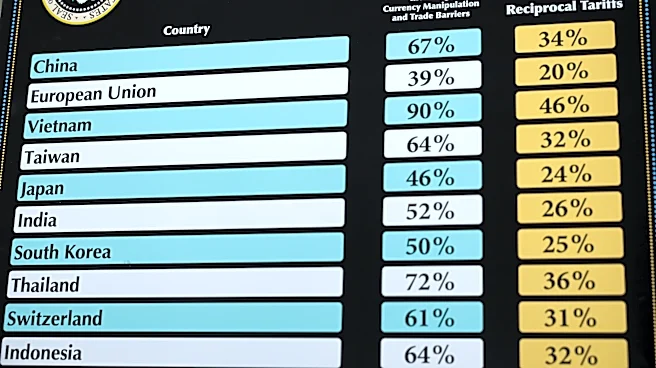
This trade agreement extends beyond immediate economic benefits, serving as a diplomatic tool to strengthen alliances and influence in the Indo-Pacific region. By enhancing economic cooperation with Thailand, the U.S. reinforces its presence and commitment to its partners in Southeast Asia, potentially counterbalancing other regional influences. The agreement could also set a precedent for future trade negotiations with other nations in the region, demonstrating the U.S.'s approach to reciprocal trade. Furthermore, the ART's long-term impact will depend on its specific provisions, which could address areas such as intellectual property rights, digital trade, and labor standards, shaping the regulatory landscape for businesses operating across borders.