





What's Happening?
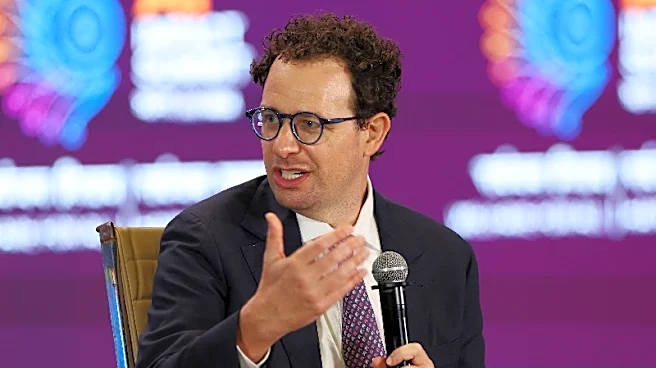
Jeetu Patel, President and Chief Product Officer (CPO) of Cisco, has emphasized the critical need for safety and security measures to advance at the same pace as artificial intelligence (AI) technology. Patel's remarks come in response to new warnings
issued within the tech industry regarding the rapid development and potential risks associated with AI. He highlighted that as AI capabilities expand, the corresponding security frameworks and safety protocols must not lag behind. The tech leader's statement underscores a growing concern among industry experts about the potential vulnerabilities and ethical challenges that could arise if AI systems are not adequately secured and regulated. This perspective suggests a proactive approach is necessary to mitigate future risks, rather than reacting to incidents after they occur. The discussion around AI safety is gaining traction as the technology becomes more integrated into various sectors.
Why It's Important?
This warning from a prominent tech leader like Jeetu Patel is crucial because it highlights a significant challenge facing the rapid advancement of artificial intelligence. If safety and security measures fail to keep pace with AI development, the potential for misuse, data breaches, and system failures could have far-reaching consequences across industries and society. Inadequate security could expose critical infrastructure, personal data, and national security to new threats. Furthermore, a lack of robust safety protocols could lead to AI systems making biased or harmful decisions, eroding public trust and hindering the technology's beneficial applications. This issue affects not only tech companies but also governments, businesses, and individuals who increasingly rely on AI-powered solutions. Addressing this gap is essential for fostering responsible innovation and ensuring that AI serves humanity positively.
What's Next?
The call for AI safety and security to 'move at the pace of AI' suggests that the tech industry, in collaboration with policymakers, will need to prioritize the development and implementation of advanced security frameworks and ethical guidelines. This could involve increased investment in AI security research, the creation of industry-wide standards for AI development, and potentially new regulatory measures from governments. Discussions around AI governance and responsible AI practices are expected to intensify, leading to more collaborative efforts between public and private sectors. Companies like Cisco may lead by example, integrating robust security-by-design principles into their AI products. The coming years will likely see a significant focus on building trust in AI through transparency, accountability, and proactive risk management, shaping the future trajectory of AI adoption and its societal impact.
Beyond the Headlines
The implications of AI safety and security extend beyond technical safeguards. This issue touches upon profound ethical and societal questions. If AI systems are not developed with robust security and safety in mind, they could exacerbate existing societal inequalities, introduce new forms of surveillance, or even pose existential risks. The concept of 'moving at the pace of AI' also implies a continuous, adaptive approach to security, recognizing that threats and vulnerabilities will evolve alongside the technology itself. This necessitates a shift in mindset from reactive problem-solving to proactive, anticipatory risk management. Furthermore, the global nature of AI development means that international cooperation on standards and regulations will be vital to prevent a fragmented and potentially dangerous AI landscape. The long-term success and acceptance of AI depend heavily on the industry's ability to build and maintain public trust through demonstrable commitment to safety and ethical deployment.