


What's Happening?
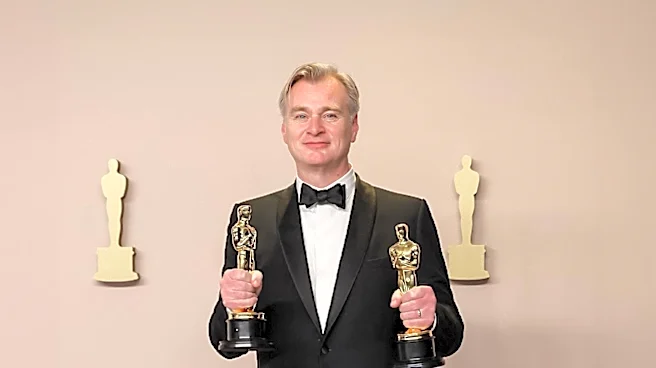
Christopher Nolan, a prominent filmmaker, has expressed skepticism about the rapid integration of artificial intelligence (AI) in the film industry. During a promotional tour for his film 'L’Odyssée,' Nolan compared AI to a Trojan horse, suggesting that
while it has quickly gained traction in business and investment sectors, it faces significant public distrust, especially among younger audiences. Nolan's comments come amid a broader industry trend where filmmakers like Darren Aronofsky and Neill Blomkamp are exploring AI-driven projects. Despite the enthusiasm from some quarters, Nolan advocates for a cautious approach, emphasizing the need to scrutinize the motivations behind AI's promotion in creative fields.
Why It's Important?
Nolan's critique highlights a growing divide in the film industry regarding the use of AI. While some see AI as a tool for innovation and cost reduction, others, like Nolan, warn of potential downsides, including the erosion of traditional creative roles and the commodification of art. His stance underscores the need for a balanced discourse on AI's role in filmmaking, considering both its potential benefits and ethical implications. As AI continues to permeate various sectors, Nolan's perspective may resonate with those concerned about preserving human creativity and agency in an increasingly automated world.
What's Next?
The debate over AI in filmmaking is likely to intensify as more studios experiment with the technology. Industry stakeholders, including directors, producers, and technology developers, will need to address concerns about AI's impact on employment, creativity, and artistic integrity. Nolan's comments may prompt further discussions at industry events and forums, potentially influencing policy decisions and guiding principles for AI use in film. As the technology evolves, the industry will need to find a balance between embracing innovation and safeguarding the human elements that define cinematic art.