








What's Happening?
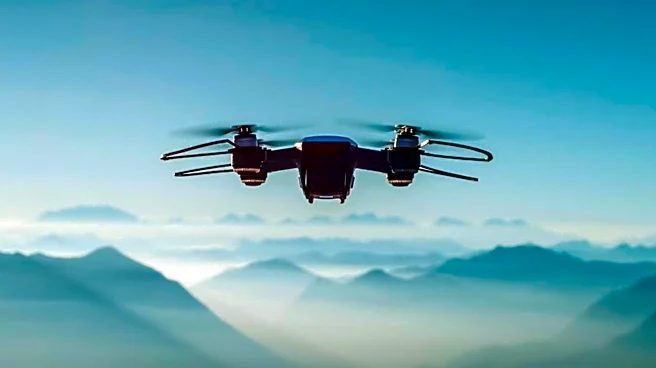
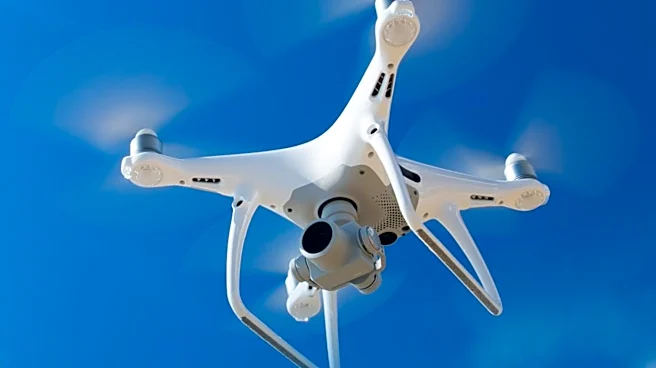
AT&T and Ericsson have showcased a new application of 5G technology to track rogue drones using their Integrated Sensing and Communication (ISAC) technology. This demonstration took place near the AT&T Stadium in Arlington, Texas, coinciding with a major
sporting event. The system uses 5G cellular radios to identify and track drones, offering an alternative to traditional radar systems. The technology leverages existing 5G infrastructure, making it cost-effective and resilient, as it can automatically compensate for network disruptions. The demonstration highlighted the potential of 5G networks to track not only drones but also other objects like vehicles or people within the network's range.
Why It's Important?
The ability to track drones using 5G networks has significant implications for security and public safety, especially in areas where drones are not permitted. This technology could enhance the security of large public events by providing real-time tracking of unauthorized drones, potentially preventing incidents like those seen in conflict zones. The use of existing 5G infrastructure for this purpose also represents a cost-effective solution, avoiding the need for additional hardware. This development could lead to broader applications in surveillance and security, impacting industries such as law enforcement and event management.
What's Next?
The technology demonstrated by AT&T and Ericsson is expected to be part of future 6G standards, but the companies are accelerating its development for immediate use. This proactive approach could lead to earlier adoption of advanced tracking capabilities, influencing how security is managed at public events and in urban areas. As the technology matures, it may also be integrated into autonomous vehicle systems, enhancing their ability to navigate complex environments safely.