





What's Happening?
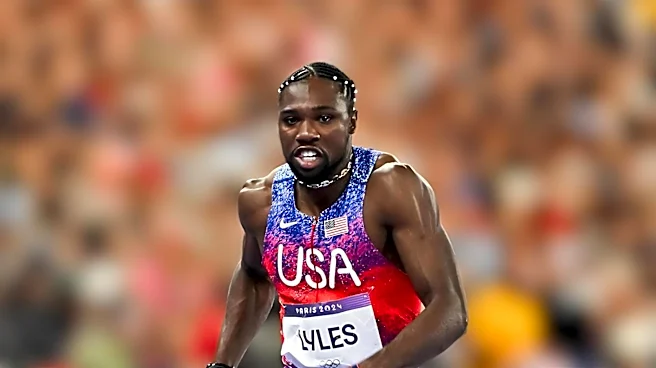
Botswana's Olympic 200m champion, Letsile Tebogo, has initiated a verbal rivalry with American sprint stars Noah Lyles and Kenny Bednarek ahead of the 2027 athletics season. On November 5, Tebogo took to social media platform X to declare his intention
to be the athlete to beat, stating, 'The 2027 season is coming, and the battle is already on. Always respect to @kenny_bednarek, @LylesNoah, but you better be ready to chase.' Lyles quickly responded with a playful yet pointed remark, referencing Tebogo's tendency to ease off before the finish line in some races. This exchange sets the stage for an anticipated competitive season, particularly in the men's 200m event. The psychological battle has begun months before the first major showdown, with all three athletes having distinct motivations for the upcoming season.
Why It's Important?
This burgeoning rivalry is significant for U.S. athletics, as it features two of its most prominent sprinters, Noah Lyles and Kenny Bednarek, against a formidable international competitor. Lyles, an Olympic 100m champion and multiple World Champion, and Bednarek, who had an impressive 2026 season including double gold at the World Athletics Ultimate Championship, represent a strong American presence in global sprinting. The challenge from Tebogo, an Olympic champion himself, elevates the competitive landscape, promising thrilling races and increased public interest in track and field. For American athletes, this rivalry could push them to new performance heights, potentially leading to more records and medals. The dynamic between these top sprinters also serves to boost the sport's visibility and commercial appeal in the U.S., attracting more fans and potentially more investment.
What's Next?
The 2027 athletics season will feature anticipated showdowns between Letsile Tebogo, Noah Lyles, and Kenny Bednarek, particularly in the 200m event. While specific dates for their first direct competition are not yet available, the social media exchange indicates that the athletes are already focused on their competitive strategies. Lyles's comment about Tebogo's finishing style suggests a tactical element that will be closely watched in future races. All three athletes are expected to intensify their training, with Tebogo having recently returned to training on October 16. The performances of these sprinters will be closely monitored as they vie for dominance, with each aiming to solidify their legacy and claim world titles and Olympic glory.
Beyond the Headlines
The verbal sparring between these elite sprinters highlights the growing trend of athletes engaging in psychological warfare through social media, adding a new dimension to sports rivalries beyond the track. This public exchange not only builds anticipation for future competitions but also allows fans to feel more connected to the athletes' personalities and competitive drives. The reference to Tebogo's 'playing opossum' by Lyles touches on the nuanced aspects of race strategy and mental fortitude in sprinting, where every fraction of a second and every ounce of effort counts. This type of interaction can foster deeper narratives within the sport, potentially drawing in a broader audience who appreciate the drama and personal stakes involved in high-level athletic competition.