



What's Happening?
As temperatures drop, hostas require specific fall care to ensure their health and vigorous growth in the following spring. This care involves timely pruning, proper watering, and pest prevention. Hostas need a 30-day cold period to re-initiate growth in spring. While
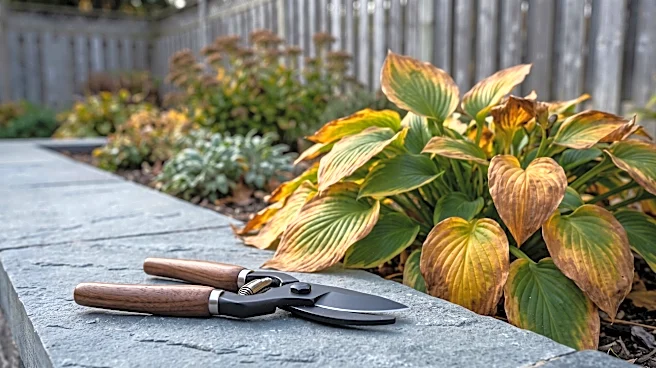
they can withstand light frosts, a hard freeze will cause leaves to become limp and brown, signaling the time to cut back the entire plant. If more than a quarter of the plant is already dying back, it indicates dormancy and the need for pruning. However, if the plant still has green, upright leaves, it should not be cut back, as these leaves are actively sending energy to the roots for winter storage. Pruning involves cutting leaves down to two inches above the soil line using clean, sharp pruners. If signs of disease are present, the leaves should be discarded, not composted, and pruners should be cleaned with rubbing alcohol. After pruning, a 2- to 4-inch layer of pine straw or mulch should be applied over the crown to protect roots from freezing and thawing, to be removed in spring when new growth appears.
Why It's Important?
Proper fall care for hostas is crucial for preventing common issues like pests and fungal diseases that can overwinter and harm new spring growth. Decaying hosta leaves left on the plant until spring can attract slugs, snails, and foster fungal infections. By cleaning and disposing of debris after cutting back hostas, gardeners can significantly reduce the risk of these problems. Maintaining a clean garden area, free from other falling leaves and debris, also helps prevent wet conditions that lead to mold or rot and deters pests like voles seeking shelter. Furthermore, consistent watering until the first frost helps protect hostas from frost heaving, a phenomenon where freezing and thawing ground lifts plants from the soil, particularly in clay and silt soils. This proactive approach ensures the plants remain robust and healthy, contributing to the aesthetic and ecological value of gardens across the U.S. without requiring extensive intervention in the spring.
What's Next?
Gardeners should continue watering hostas until the first frost and the ground begins to freeze, ensuring the soil remains consistently moist but not soggy. Deep watering every one to two weeks around the base of the plant is recommended. Once the ground freezes, regular watering is no longer necessary as the roots cannot absorb moisture, though monitoring the soil during warm spells to prevent complete drying is advisable. Fertilization should cease before fall arrives, with the last application in mid to late summer. Fertilizing in fall or winter can encourage tender growth that is unlikely to survive frost. Adding compost annually can improve soil health. While hostas are typically divided in spring, fall division is possible if done at least 30 days before the first frost, allowing new transplants time to establish. Divisions can be overwintered indoors in pots if time is short, then planted outdoors in spring after the threat of frost has passed.
Beyond the Headlines
The detailed fall care regimen for hostas highlights a broader principle in horticulture: understanding and adapting to the natural dormancy cycles of perennial plants. This approach not only ensures the survival and vigor of individual plants but also contributes to sustainable gardening practices by minimizing the need for chemical interventions against pests and diseases. The emphasis on natural mulching for insulation and proper watering techniques reflects an ecological awareness that supports soil health and plant resilience. For home gardeners, these practices foster a deeper connection to the seasonal rhythms of nature and promote a more hands-on, observational approach to plant care. This attention to seasonal needs can also inform broader landscape management strategies, encouraging the selection of plants suited to local climates and reducing resource consumption associated with intensive year-round maintenance.