




What's Happening?
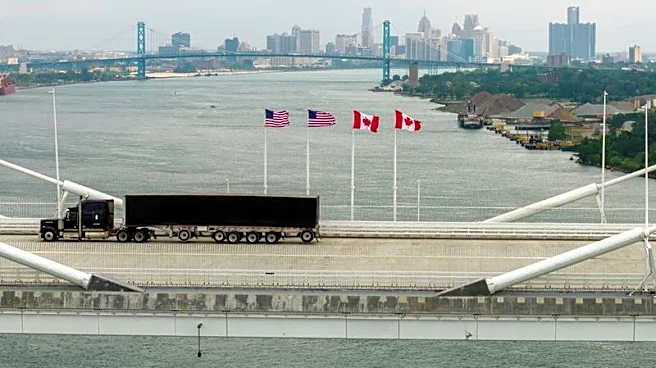
Werner Enterprises, a prominent North American truckload carrier, is actively involved in transporting consumer goods and food across the United States, Canada, and Mexico. The company also provides logistics services, assisting shippers with routing,
documentation, and compliance for cross-border freight. Werner Enterprises generates approximately US$2.3 billion from its Truckload Transportation Services and US$848 million from Werner Logistics, with the majority of its revenue originating from the United States, supplemented by operations in Mexico and Canada. The company's operations are deeply integrated into North American trade routes, offering direct exposure to the evolving flow of goods between these three nations. This is particularly relevant as tariffs and customs regulations become increasingly intricate. However, Werner Enterprises is currently facing challenges, including unprofitability, increased reliance on debt, and escalating costs for labor, insurance, and equipment. These factors could potentially strain the company's cash generation if market conditions were to soften.
Why It's Important?
Werner Enterprises' position as a key player in North American cross-border logistics highlights the significant impact of trade policies and economic conditions on the transportation sector. The company's direct exposure to the flow of goods between the U.S., Canada, and Mexico means that any shifts in tariffs or customs rules directly affect its operations and profitability. For instance, management has indicated that about 10% of its revenue is linked to Mexico cross-border shipments, underscoring the importance of stable trade relations. The rising costs for labor, insurance, and equipment are not unique to Werner Enterprises but reflect broader inflationary pressures and operational challenges within the U.S. trucking industry. These cost increases, coupled with unprofitability and higher debt reliance, could lead to reduced investment in fleet modernization or expansion, potentially impacting the efficiency and capacity of the North American supply chain. Investors and stakeholders in the logistics sector will closely monitor how Werner Enterprises manages these financial and operational headwinds, as its performance can serve as an indicator for the health of cross-border trade and the broader U.S. economy.
What's Next?
Werner Enterprises will likely focus on strategies to mitigate the impact of rising operational costs and address its unprofitability and debt reliance. This could involve optimizing its logistics services, enhancing efficiency in its truckload operations, and potentially adjusting pricing structures to reflect the increased expenses. Given the evolving landscape of tariffs and customs rules between the U.S., Canada, and Mexico, the company will need to remain agile in adapting its cross-border freight solutions. Its existing long-standing operations, low-age fleet, and flexible options like intermodal and temperature-controlled capacity provide a foundation for navigating these complexities. The company's ability to recover earnings and manage its balance sheet risk will be crucial for its future performance. Investors will be looking for signs of improved cash generation and a reduction in debt reliance, especially if market conditions remain challenging or soften further. The ongoing trade discussions and potential changes in policy between the North American countries will also be a critical factor influencing Werner Enterprises' operational environment and strategic decisions.
Beyond the Headlines
The challenges faced by Werner Enterprises extend beyond its immediate financial performance, touching upon broader themes within the U.S. and North American economic landscape. The increasing complexity of tariffs and customs rules underscores a global trend towards more protectionist trade policies, which can create significant operational hurdles for logistics companies. This environment necessitates greater investment in compliance, technology, and flexible supply chain solutions. Furthermore, the rising costs of labor, insurance, and equipment reflect systemic issues within the transportation industry, including driver shortages, increasing regulatory burdens, and the capital-intensive nature of maintaining a modern fleet. These factors can lead to higher shipping costs for consumers and businesses, potentially contributing to inflationary pressures across various sectors. The reliance on debt by companies like Werner Enterprises also highlights the broader economic environment of interest rate fluctuations and access to capital, which can impact investment and growth strategies. Ultimately, the ability of key logistics providers to adapt to these multifaceted challenges will be a critical determinant of the resilience and efficiency of North America's supply chains.