





What's Happening?
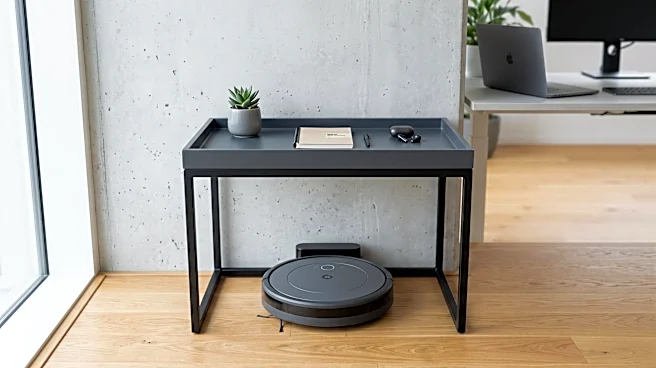
Nicky M. has devised a simple yet effective IKEA hack, converting a GLADOM tray table and a SKALA tray into a two-tiered printer stand that also serves as a docking station for a robot vacuum. The modification involves switching the original GLADOM tray with
a SKALA tray (or the similar OMBONAD tray, as SKALA is no longer available in IKEA US) to create the top tier. Crucially, the bottom crossbars of the GLADOM table are removed using a metal saw to allow a robot vacuum to slide underneath for charging and storage. This hack is praised for its ease of execution, requiring minimal tools and time, and for its ability to maximize floor space in small home offices.
Why It's Important?
This IKEA hack offers a practical and cost-effective solution for U.S. consumers looking to optimize small living or working spaces. The increasing prevalence of remote work has led to a greater need for functional home office setups, often within limited square footage. By providing a dual-purpose furniture piece, this hack addresses the common challenge of accommodating multiple devices and appliances without cluttering the floor. It empowers individuals to customize affordable, mass-produced furniture to meet specific needs, fostering creativity and resourcefulness. The hack's emphasis on space-saving is particularly relevant in urban areas where housing costs are high and efficient use of every inch is paramount, potentially saving consumers money on more expensive, specialized furniture.
What's Next?
Individuals interested in replicating this hack should first measure their robot vacuum and docking station to ensure proper clearance after removing the crossbars. They should also consider the weight of their printer to confirm the modified table's stability. The guide suggests checking IKEA's 'as-is' section or Facebook Marketplace for discounted items to make the hack even more economical. This trend of 'IKEA hacking' is likely to continue evolving, with more users sharing innovative ways to adapt affordable furniture to modern living challenges, particularly in the context of home office and small space optimization.
Beyond the Headlines
The popularity of IKEA hacks reflects a broader cultural shift towards DIY solutions and personalization in consumer goods. It highlights a desire among consumers to transcend the limitations of mass-produced items and create bespoke pieces that perfectly fit their lifestyle and aesthetic preferences. This movement also taps into principles of sustainability by encouraging the repurposing and extending the life of furniture, rather than constant consumption of new items. Furthermore, the hack demonstrates how simple design modifications can significantly enhance the functionality of everyday objects, fostering a sense of empowerment and practical problem-solving in the face of spatial constraints in contemporary homes.