


What's Happening?
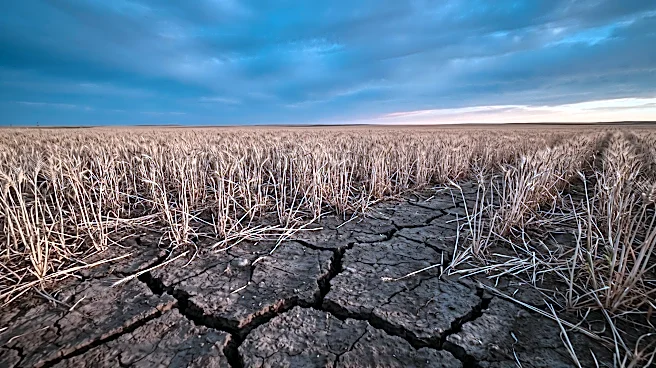
A new international study has concluded that water scarcity could lead to a tripling of international wheat prices. The research, which involved scientists from Rothamsted Research and specialists in climate science, agronomy, crop modeling, and food-system
economics, found a strong correlation between severe drought in global wheat-growing regions and global wheat prices. The study developed a new indicator called severe water scarcity (SWS), which captures short-term and long-term water deficits during the four months before harvest, a critical period for wheat. This SWS indicator alone explained 74% of the annual variation in global wheat prices between 2000 and 2021. For maize, SWS explained up to 40% of price variability, while no meaningful relationship was found for rice. The model, built without data from 2022-2024, accurately captured price levels and shifts during these turbulent years, providing a strong real-world validation. Between 2000 and 2020, an average of 5% of global wheat land experienced severe water scarcity annually, with spikes to over 15% in major drought years like 2000, 2010, 2012, and 2020, which coincided with significant movements in global wheat markets.
Why It's Important?
This study highlights a growing climate-related risk to one of the world’s most important crops, wheat, which covers more land globally than rice or maize and supplies a major share of human calories and protein. The findings are crucial for farmers, traders, millers, and food manufacturers, as they indicate potential significant price volatility and increases. The research predicts that a 2°C warming of global temperatures could see average wheat prices reach US$273/t, and a 3°C warming could push prices to US$364/t, roughly three times the inflation-adjusted price in 2010. Such substantial price increases would have far-reaching economic consequences, impacting food security, consumer costs, and agricultural profitability worldwide. The reliance of wheat on water-limited conditions makes it highly vulnerable to drought, underscoring the need for proactive strategies to mitigate the effects of climate change on agricultural production and global food supply chains. The U.S., as a major wheat producer and consumer, would experience direct impacts on its agricultural sector and food prices.
What's Next?
The study's projections suggest that future climate challenges could make drought-related price shocks for wheat far more frequent and extreme. This necessitates a focus on developing and implementing strategies to enhance water resilience in wheat-growing regions globally. Potential next steps include increased investment in drought-resistant crop varieties, improved irrigation technologies, and water management practices. Policymakers and agricultural stakeholders will likely need to consider how to adapt to these predicted price increases and supply instabilities. This could involve developing new risk management tools for farmers and food industries, exploring alternative food sources, and strengthening international cooperation on water resource management and climate adaptation in agriculture. The findings also underscore the urgency of global efforts to address climate change to prevent the most severe price increases and ensure long-term food security.
Beyond the Headlines
The study's findings extend beyond immediate price concerns, revealing deeper implications for global food systems and economic stability. The clear link between water scarcity and wheat prices highlights the interconnectedness of environmental factors, agricultural practices, and market dynamics. The fact that wheat, a staple crop, is so susceptible to water deficits suggests a fundamental vulnerability in the global food supply. This could lead to increased geopolitical tensions as countries grapple with securing essential food resources in a climate-stressed world. Furthermore, the study implicitly calls for a re-evaluation of agricultural subsidies and policies that might inadvertently encourage water-intensive farming in arid regions. The potential for significant price hikes could also exacerbate food inequality, disproportionately affecting lower-income populations and potentially leading to social unrest. The research serves as a stark reminder that climate change is not merely an environmental issue but a profound economic and social challenge with tangible impacts on daily life.