







What's Happening?
Carlos Odebret, president of the Magallanes Salmon Farmers Association in Chile, has publicly criticized outdoor clothing company Patagonia Inc. for its campaign against salmon farming in protected areas of Chile. Patagonia Inc., founded by Yvon Chouinard,
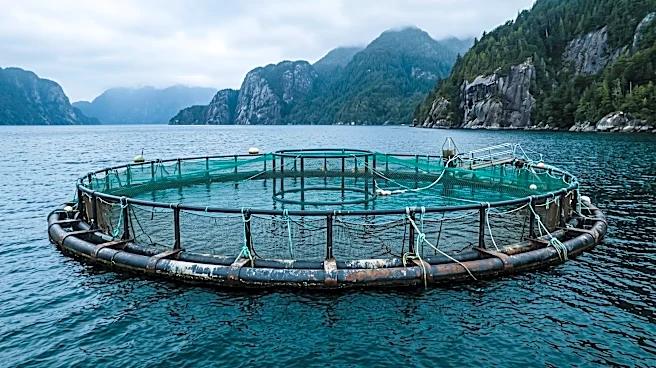
is promoting a campaign with the slogan 'Say no to salmon farming in protected areas,' citing alleged environmental impacts, antibiotic use, and workplace accidents. Odebret highlights that Patagonia Inc. sells wild-caught salmon from Alaska at premium prices in the United States, while its clothing products are primarily manufactured in low-wage economies outside of Patagonia. He argues that the company's campaign against Chilean salmon farming benefits its own business interests and questions its right to use the 'Patagonia' name given its lack of local production or residency of its executives in the region. The campaign by Patagonia Inc. focuses on the presence of salmon farming concessions within national parks and reserves in Chilean Patagonia, some of which were designated after the farms were established.
Why It's Important?
This dispute underscores a growing tension between environmental advocacy by U.S.-based corporations and local industries in other countries, particularly concerning resource utilization and economic development. For U.S. consumers, it raises questions about the ethical consistency of brands that champion environmental causes while sourcing products globally under different labor and environmental standards. The controversy could influence consumer perceptions of Patagonia Inc.'s brand integrity and its 'Patagonia Provisions' line of food products. For the Chilean salmon industry, a major global producer, the campaign by a prominent international brand could impact its reputation and market access, potentially leading to increased scrutiny from international buyers and regulatory bodies. The debate also highlights the complexities of defining and protecting 'Patagonia' as a geographical and cultural entity versus a corporate brand, with implications for intellectual property and regional identity.
What's Next?
The Magallanes Salmon Farmers Association is likely to continue its efforts to counter Patagonia Inc.'s campaign, potentially through public relations and direct engagement with stakeholders. Patagonia Inc. is expected to maintain its advocacy against salmon farming in protected areas, aligning with its stated environmental mission. This could lead to further public debate and potentially influence policy discussions in Chile regarding aquaculture regulations and protected area management. Consumers in the U.S. and internationally may become more aware of the origins and environmental impacts of both salmon products and outdoor apparel, potentially shifting purchasing habits. The situation could also prompt other U.S. companies with global supply chains to re-evaluate their environmental advocacy strategies and ensure consistency across their operations and messaging.
Beyond the Headlines
The conflict delves into deeper ethical and economic considerations beyond the immediate dispute. It highlights the challenge of 'greenwashing,' where companies might selectively apply environmental standards or criticisms. The fact that Patagonia Inc. manufactures most of its clothing in low-wage countries, as detailed in a 2023 report by Human Trafficking Search, contrasts with its strong environmental stance, raising questions about corporate responsibility across all aspects of its operations. This situation also touches upon the concept of 'brand ownership' versus 'regional identity,' as Odebret argues that the name 'Patagonia' belongs to those who live and work there, not a California company. This could set a precedent for how indigenous or regional names are used and protected by international corporations, potentially sparking broader discussions on cultural appropriation and economic equity in global trade.