






What's Happening?
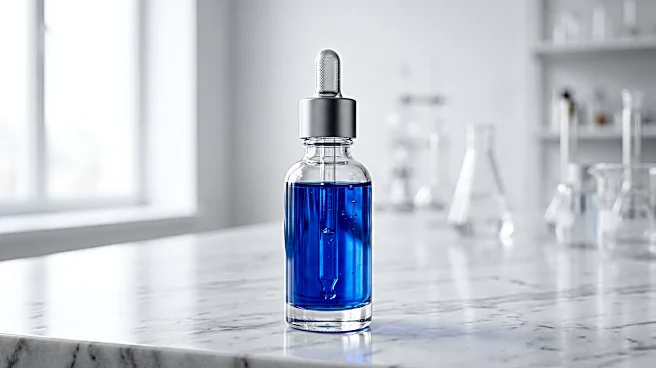
Musely, a platform offering doctor-prescribed skincare treatments, has issued a clarification regarding methylene blue's role in skin longevity conversations. Methylene blue, a synthetic compound with established medical uses, is gaining attention in skin research
due to its activity in oxidative-stress models and its impact on mitochondria, which are crucial for cellular energy and stress response. However, Musely emphasizes that methylene blue is not a peptide, retinoid, exfoliant, or sunscreen. The company highlights that laboratory studies have shown methylene blue's antioxidant activity in cultured human skin fibroblasts and reconstructed 3D human skin models, leading to changes in viability, hydration, and dermal thickness. Musely also stresses that these findings do not automatically establish the benefits, ideal dose, or long-term safety of every topical or oral methylene blue product. The company differentiates methylene blue from copper peptides, such as GHK-Cu, which are short amino-acid chains bound to copper, typically used in topical skincare for concerns like rough texture, fine lines, and firmness. Musely advises against self-dosing or mixing these compounds without professional guidance.
Why It's Important?
This clarification from Musely is important for consumers navigating the increasingly complex landscape of skincare and 'biohacking' trends. By distinguishing between methylene blue and copper peptides, Musely helps to manage expectations and promote safer practices in skin longevity routines. The emphasis on professional medical review for oral methylene blue formulations underscores the potential for significant drug interactions and contraindications, particularly for individuals using serotonergic medicines, opioids, or those with G6PD deficiency. This guidance protects consumers from potential adverse health outcomes that could arise from improper use or self-medication. For the skincare industry, this highlights the need for clear communication about product efficacy, safety, and the limitations of laboratory research versus clinical trials. It also reinforces the value of doctor-prescribed treatments, ensuring that powerful compounds like methylene blue are used under appropriate medical supervision, thereby safeguarding public health and maintaining trust in advanced skincare solutions.
What's Next?
Musely recommends that individuals interested in skin longevity build a stable baseline routine, including daily sun protection, a gentle cleanser, and a moisturizer. Methylene blue and copper peptides should be considered as additions to this routine, not replacements for basic skincare. For those exploring an oral prescription approach, Musely offers 'The Skin Pill,' a clinician-reviewed treatment containing methylene blue, glutathione, and Polypodium leucotomos, designed to address long-term sun-related damage, dullness, and skin aging. A Musely doctor will determine the appropriateness of such a formula. Similarly, 'The Peptide Serum,' a doctor-prescribed topical treatment with Copper Peptide (GHK-Cu), is available for addressing firmness, smoothness, and fine lines. The company advises against do-it-yourself mixing or self-dosing and stresses the importance of a clinician reviewing a patient's full medication list and health history before considering any prescribed formula containing methylene blue.
Beyond the Headlines
The growing interest in compounds like methylene blue for skin longevity reflects a broader societal trend towards 'biohacking' and extending healthspan. While promising, this trend also brings ethical and regulatory challenges. The distinction between laboratory research and clinical trials, as highlighted by Musely, is crucial for preventing the premature adoption of unproven treatments. The potential for serious drug interactions with methylene blue underscores the need for stringent medical oversight, especially as more potent compounds move from research labs to consumer-accessible products. This situation also raises questions about consumer education and the responsibility of companies to provide accurate, nuanced information about complex ingredients. As the pursuit of longevity intensifies, the balance between innovation, safety, and informed consumer choice will become an increasingly critical aspect of public health and regulatory policy.