





What's Happening?
Ugreen, known for power banks and network storage, has unveiled HomeAgent, a new smart home platform at IFA. This platform is built around a local hub, on-device AI, and a new voice assistant named Uliya. The core promise of HomeAgent is data privacy,
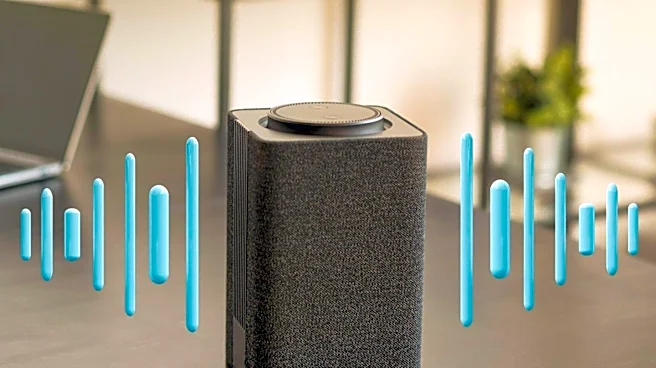
emphasizing that user data remains local rather than being processed in the cloud. The system integrates security camera storage and voice control into a single, local-first system. Ugreen offers three hub configurations, with the H100 Pro handling camera footage storage and AI inference locally, relying on cloud services only for specific features. Uliya, the voice assistant, is designed to interpret natural language commands and route them through the local hub, a departure from the cloud-dependent models of existing voice assistants like Amazon's Alexa and Google's Assistant.
Why It's Important?
Ugreen's HomeAgent represents a significant shift in the smart home industry by prioritizing local AI processing and data privacy. This approach directly addresses growing consumer concerns in the U.S. regarding data security, surveillance, and the reliability of cloud-dependent smart home systems. By keeping data on-device, HomeAgent aims to offer enhanced privacy and ensure functionality even during internet outages, a common frustration with current smart home technologies. This could appeal to a segment of the U.S. market that values control over their personal data and seeks more robust, independent smart home solutions. The move could also spur other manufacturers to explore similar local-first AI strategies, potentially leading to a more diverse and privacy-conscious smart home ecosystem.
What's Next?
The launch of HomeAgent at IFA signals Ugreen's entry into the competitive smart home market with a distinct privacy-centric value proposition. The success of this platform will depend on its ability to deliver a polished user experience comparable to established cloud-based systems, while maintaining its local processing advantages. Consumers will be watching to see how Uliya performs in real-world scenarios and how seamlessly the local AI integrates with various smart home devices. If successful, Ugreen could carve out a niche among privacy-conscious consumers and potentially influence the broader industry to adopt more local processing capabilities. The company's NAS heritage suggests a strong foundation for managing local data and security, which could be a key differentiator in the evolving smart home landscape.
Beyond the Headlines
Ugreen's emphasis on local AI and data privacy in the smart home context highlights a critical tension in the broader technology landscape: the trade-off between convenience and privacy. While cloud-based AI offers vast capabilities and seamless integration, it often comes at the cost of personal data control. HomeAgent's approach challenges the prevailing model, suggesting that a significant portion of AI processing can and should occur at the edge, within the user's home. This could have profound implications for the future of AI development, encouraging more decentralized and user-centric architectures. It also raises questions about the regulatory environment for smart home data, and whether existing laws adequately protect consumers in an increasingly interconnected and data-rich domestic sphere. The long-term impact could be a re-evaluation of how personal data is handled by technology companies and a greater demand for transparency and control from consumers.