






What's Happening?
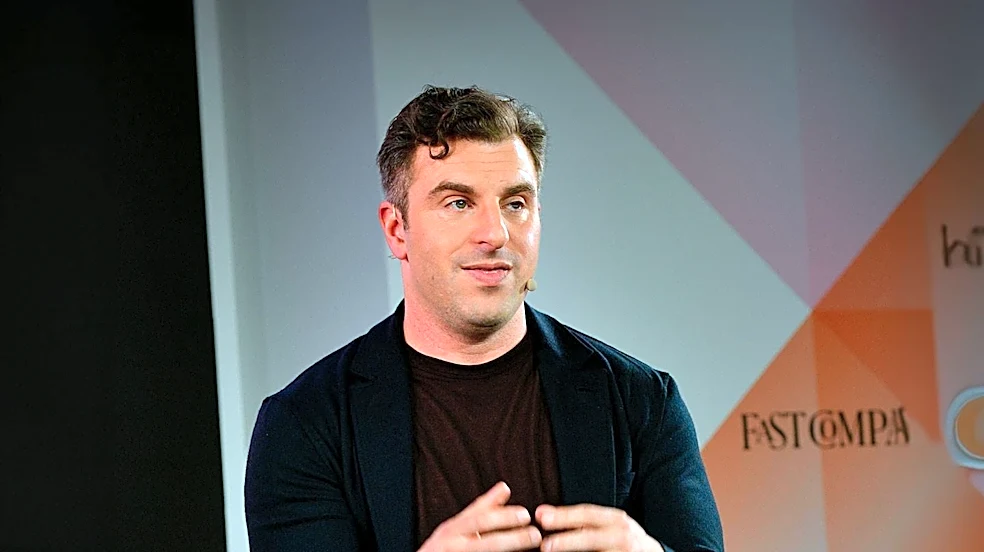
Brian Chesky, the CEO of San Francisco-based home-sharing company Airbnb, has largely abandoned writing emails, preferring to communicate with his team through text messages. While he still responds to emails he receives, Chesky stated in an interview
with Time that he might not write an email a week. He explained that texting feels less like work to respond to, fostering a 'deeper connection.' This approach contrasts with other prominent CEOs, such as Nvidia's Jensen Huang and Uber's Dara Khosrowshahi, who continue to rely heavily on email for managing their companies. Huang, for instance, reviews daily 'Top-5 Things' emails from his staff, while Khosrowshahi expects weekend email responses from his employees. Chesky ranks face-to-face conversations first, followed by Zoom, then texting, with email coming in last, noting that texts bypass the formality of a subject line.
Why It's Important?
Chesky's communication preference highlights a growing trend in corporate environments where traditional email is being supplemented or replaced by more immediate messaging platforms. This shift can impact workplace culture, potentially leading to increased expectations for instant responses and blurring the lines between work and personal time. While Chesky believes texting creates a deeper connection and reduces the perception of work, it could also contribute to the 'always-on' culture that many employees find stressful. Microsoft's 2025 Work Trend Index survey indicated that 48% of employees and 52% of leaders feel their work is 'chaotic and fragmented,' partly due to the rise in after-hours messages and meetings. The Eurofound analysis from June 2026 further supports this, showing that stress at work increases significantly with the frequency of after-hours contact. This divergence in CEO communication styles underscores the ongoing evolution of workplace communication and its potential effects on employee well-being and productivity.
What's Next?
The trend of CEOs adopting alternative communication methods like texting could lead to a re-evaluation of corporate communication policies across various industries. Companies might need to establish clearer guidelines regarding preferred communication channels and response expectations, especially for after-hours contact, to mitigate employee stress and burnout. Employees may increasingly need to adapt to diverse communication preferences among their managers, potentially requiring them to be proficient across multiple platforms. Furthermore, the emphasis on 'deeper connection' through texting could influence the development of new internal communication tools designed to foster more informal and immediate interactions, while still addressing the need for formal documentation for critical matters like raise requests or changes in duties. The differing approaches of high-profile CEOs like Chesky, Huang, and Khosrowshahi will likely continue to fuel discussions about the most effective and employee-friendly ways to manage internal communications in the modern workplace.
Beyond the Headlines
Chesky's preference for texting over email touches upon deeper psychological and cultural aspects of modern work. The idea that texting 'doesn't feel like work to respond' suggests a subconscious association of email with formal, burdensome tasks, while texts are perceived as more casual and less demanding. This perception could stem from the historical use of email for official correspondence and its often-overwhelming volume. However, relying heavily on texting for professional communication could also erode the boundaries between personal and professional life, making it harder for employees to disconnect. The informal nature of texting might also lead to a lack of detailed documentation for important decisions, potentially creating ambiguities or legal challenges in the long run. The contrast with CEOs who still prioritize email, often for its structured and documented nature, highlights a fundamental tension between efficiency, informality, and the need for clear, recorded communication in corporate governance. This evolving landscape of communication tools necessitates a careful balance to ensure both productivity and employee well-being.