







What's Happening?
Community colleges across the U.S. are rapidly expanding their semiconductor training programs to combat an anticipated labor shortage in the domestic chip industry. This initiative is a direct response to the 2022 CHIPS Act, which has spurred over $800
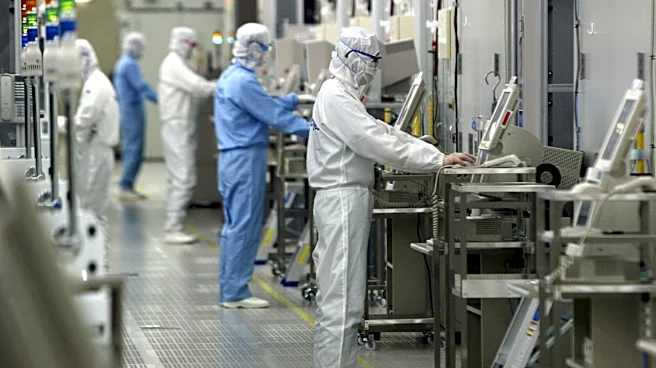
billion in investments for new U.S. semiconductor fabrication plants. The industry faces a potential deficit of up to 157,000 full-time workers by 2030, particularly in states like Texas, Ohio, California, New York, and Arizona. Programs, such as a tuition-free, three-month crash course at Rio Salado College in Arizona, are designed to quickly train individuals for entry-level positions, like technicians who maintain and service production equipment. These accelerated courses often include virtual reality training and hands-on experience in clean-room labs, preparing students for interviews with major chipmakers. Over 200 community colleges and universities nationwide are coordinating with industry groups like SEMI to develop these targeted training pathways.
Why It's Important?
The expansion of semiconductor training programs is crucial for the U.S. to realize its ambitions in domestic chip production and leadership in artificial intelligence. A significant labor shortage could stall production plans at new fabrication plants, undermining the strategic goals of the CHIPS Act. By providing accessible, short-term training, community colleges are creating a vital pipeline of skilled workers, offering individuals a debt-free path to well-paying jobs in a booming industry. This effort helps reduce reliance on foreign talent and strengthens the U.S. manufacturing base. The success of these programs will directly impact the operational capacity of major chipmakers like TSMC, Samsung, and SK Hynix, which are investing heavily in U.S. facilities and currently bringing in experienced engineers from abroad to bridge the skills gap. The ability to staff these advanced plants locally is paramount for long-term economic and technological security.
What's Next?
The immediate focus is on whether these accelerated training programs can scale quickly enough to meet the substantial hiring demands of new semiconductor plants. While companies like TSMC are bringing in foreign experts to train American workers, the long-term sustainability depends on a robust domestic workforce. Continued collaboration between federal agencies, industry leaders, and educational institutions will be essential to refine curricula and ensure training aligns with evolving industry needs. The effectiveness of these programs will be measured by the number of graduates successfully placed in semiconductor jobs and their ability to retain these positions. Future developments may include further government funding for educational infrastructure and incentives for individuals to pursue careers in semiconductor manufacturing, particularly in regions identified as having the most acute labor shortages.
Beyond the Headlines
This initiative highlights a broader shift in workforce development, emphasizing vocational training and alternative pathways to high-tech careers beyond traditional four-year degrees. It underscores the strategic importance of semiconductors, not just as a technological component, but as a critical element of national security and economic competitiveness. The challenge of building a skilled workforce from the ground up in a highly specialized field also brings into focus the need for continuous adaptation in education and industry. The success of these programs could serve as a model for other sectors facing similar talent gaps, demonstrating how targeted, hands-on training can rapidly address critical labor needs and foster economic mobility for a diverse range of individuals, including older workers and those seeking career changes.