




What's Happening?
Korean beauty (K-Beauty) is rapidly expanding its global influence, transforming from a niche trend into a significant category in the worldwide beauty market. K-Beauty products have seen a substantial increase in value sales, rising 53% over the past
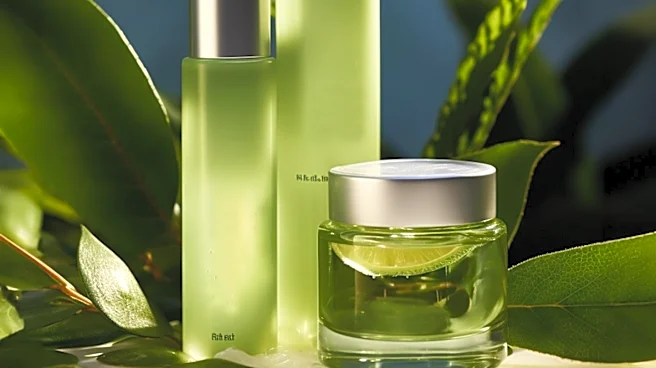
year and 131% over two years. This growth is attributed to several factors, including affordability, which makes products accessible across various budgets, and packaging designed for discovery, featuring clean, minimalist formats with prominent ingredient claims. Social media platforms, particularly among younger consumers, have amplified K-Beauty's reach through creator content and product recommendations. The global rise of Korean culture, encompassing K-Pop, K-Dramas, and cuisine, has also contributed to increased awareness and credibility for Korean brands.
Why It's Important?
K-Beauty's expanding influence has significant implications for the U.S. beauty industry. Its focus on ingredient-led products, efficacy, and innovation is reshaping consumer expectations and competitive landscapes. U.S. brands are increasingly adopting K-Beauty principles, such as transparent ingredient lists and innovative product formats, to meet evolving consumer demands. The affordability of K-Beauty products challenges traditional U.S. market segmentation, pushing both mass-market and luxury brands to re-evaluate pricing and value propositions. Furthermore, K-Beauty's effective use of social media for discovery and purchase sets a new standard for digital marketing in the beauty sector, influencing how U.S. brands engage with consumers, especially younger demographics. This trend fosters a more dynamic and competitive market, benefiting consumers with a wider array of innovative and accessible products.
What's Next?
The continued expansion of K-Beauty's influence suggests that U.S. beauty brands will further integrate K-Beauty trends and innovations into their product development and marketing strategies. This could lead to an increase in ingredient-focused formulations, minimalist packaging, and more accessible price points across various beauty categories. The emphasis on social media-driven discovery and direct-to-consumer models, as seen with K-Beauty, will likely become more prevalent in the U.S. market. Additionally, the global popularity of Korean culture is expected to sustain and even accelerate K-Beauty's growth, potentially leading to more collaborations between U.S. and Korean brands, or U.S. companies acquiring K-Beauty brands to capitalize on their expertise and market appeal. This trajectory points towards a more globally integrated and innovation-driven U.S. beauty landscape.
Beyond the Headlines
K-Beauty's rise transcends mere product trends; it represents a cultural phenomenon that has profoundly impacted global perceptions of beauty and self-care, including in the U.S. The emphasis on a multi-step skincare routine, often associated with K-Beauty, has shifted consumer habits, promoting a more holistic and preventative approach to beauty. This cultural exchange also highlights the power of soft diplomacy, where cultural exports like K-Pop and K-Dramas create a receptive audience for related products. The focus on ingredient transparency and efficacy, driven by K-Beauty, is fostering a more educated and demanding consumer base, pushing the entire industry towards greater accountability and scientific rigor. This long-term shift could lead to a more diverse and inclusive beauty market, where innovation is valued over traditional brand heritage, and consumer education becomes a cornerstone of marketing.