






What's Happening?
Klarna (KLAR) stock experienced a significant 22% drop after the Swedish buy-now, pay-later firm released its earnings and revised its financial outlook, which fell short of Wall Street expectations. The company trimmed its projections for both revenue
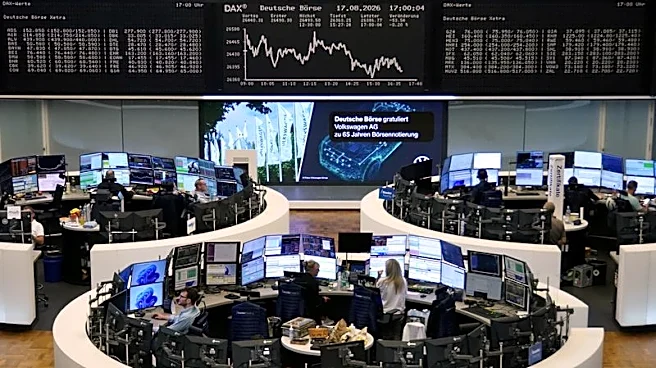
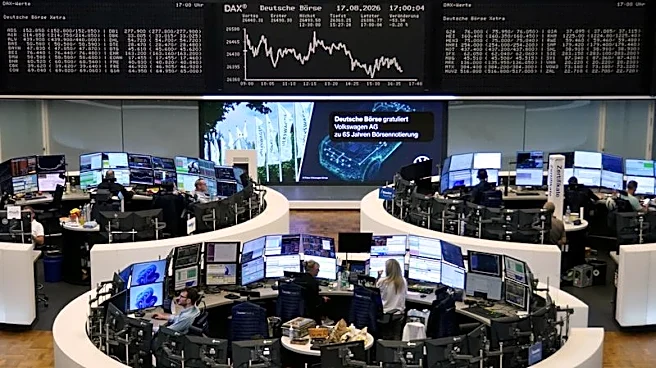
and Gross Merchandise Volume (GMV), a key metric representing the total value of goods sold through its platform. Klarna now anticipates its 2026 GMV to be between $149 billion and $151 billion, a reduction from its previous forecast of $155 billion. Similarly, its revenue guidance for the year has been lowered to $4.08 billion-$4.16 billion, down from the earlier $4.34 billion. This downward revision is primarily attributed to a slowdown in retail sales and dampened consumer sentiment in Germany, which is Klarna's largest market by volume.
Why It's Important?
Klarna's stock plunge and revised guidance highlight the sensitivity of financial technology companies, particularly those in the buy-now, pay-later sector, to macroeconomic conditions and consumer spending trends. While the immediate impact is on Klarna, the underlying reasons—slowing retail sales and depressed consumer sentiment in a major European market—could signal broader economic headwinds that may eventually affect U.S. consumer spending and the performance of similar fintech companies operating in the U.S. market. The buy-now, pay-later model is often considered more exposed to lower-income consumers, and a downturn in consumer health could lead to increased delinquencies and reduced transaction volumes. This situation serves as a cautionary indicator for investors and businesses in the U.S. financial services sector, emphasizing the interconnectedness of global economic health and its potential ripple effects on various industries.
What's Next?
Despite the trimmed guidance, Klarna did report an unexpected profit of $0.01 per share in the second quarter, surpassing analyst estimates for a loss. Revenue also increased by 27% year-over-year to $1.04 billion, exceeding expectations. Notably, the company observed a decrease of over 20 basis points quarter-to-quarter in the number of consumers over 30 days delinquent on their loans, which could be interpreted as a positive sign for consumer health, particularly among its customer base with an average balance of $124. Klarna's CFO, Niclas Neglén, indicated that the company expects strong GMV growth in the U.S. during the second half of the year due to five significant integrations. This suggests a strategic pivot or increased focus on the U.S. market to offset the slowdown in Germany, indicating potential competitive shifts within the U.S. buy-now, pay-later landscape.
Beyond the Headlines
The Klarna situation underscores the inherent volatility and growth challenges faced by companies in the rapidly expanding buy-now, pay-later sector. While the model offers convenience to consumers, its profitability is heavily reliant on sustained consumer spending and effective risk management. The impact of regional economic slowdowns, such as in Germany, demonstrates the need for geographical diversification and robust market analysis for global fintech players. Furthermore, the focus on the U.S. market for future growth highlights the competitive intensity within the American financial services landscape, where established banks and emerging fintechs vie for market share. The long-term sustainability of the buy-now, pay-later model will depend on its ability to adapt to changing economic climates, manage credit risk effectively, and maintain consumer trust amidst evolving regulatory scrutiny.